e

Thứ Năm, tháng 4 25, 2024

System Hardening with Aerial-Covered Conductor


System Hardening with Aerial-Covered Conductor

April 20, 2024
Covered conductor systems, both spacer cable and tree wire, are cost-effective design tools for wildfire mitigation.

Electric utilities in the U.S. and around the world have been increasingly grappling with wildfires over the last couple of decades. Of particular concern are wildfires caused by power lines. These are especially troublesome considering public safety concerns and property losses. As such, a fundamental goal in designing power lines for operation in wildfire-prone regions is to ensure the lines are hardened against the potential to ignite a fire. The emphasis here is not about wildfire survival but rather preventing wildfire ignition in the first place.

While numerous techniques exist to harden a system to survive wildfires — such as brush clearing, prediction, monitoring, smart grid, pole changeouts and public safety power shutoffs — the ultimate goal is to prevent ignition by system design.

Bare Wire Lines

Wildfire ignition incidents connected with power lines have been tied exclusively to bare wire lines, which are fundamentally susceptible to being a source of ignition. Bare wire lines can contact trees or fall to the ground and start a fire. Even if a line falls to the ground deenergized, it can encounter a stone or hard object and throw a spark, causing ignition. Some protective-relaying schemes have been devised to anticipate a line falling to the ground and deenergizing the line before it hits the ground. While this is a valuable tool, if bare metal hits a rock and throws a spark, ignition can still occur.

Some utilities have chosen to use interphase spacers on bare wire lines, posing the risk of conductor clashing — in which high winds cause one conductor to blow into another, producing high-temperature plasma particles that inevitably fall to the ground and serve as a potent source of ignition. The interphase spacers are installed between the phase conductors, midspan, and prevent the conductors from touching during high-wind events.

A more recently introduced strategy is the use of flame-retardant (FR) insulators. Wildfires can reach temperatures of 1100°F to 2000°F (593°C to 1093°C), yet the high-density polyethylene (HDPE) material used in distribution insulators can ignite at a much lower temperature—around 650°F (343°C)—so a passing, or static, wildfire can still ignite the insulator at the top of the pole. In contrast, if FR insulators are ignited, they self-extinguish when the flame is removed and prevent flaming drips of polyethylene from dropping down onto ignitable material that may be lying on the crossarm or ground below.

Undergrounding Power Lines

Undergrounding has become a standard go-to strategy for wildfire mitigation. Popular among residents and regulators alike, underground lines are aesthetic, cannot throw a spark onto dry brush and are not bothered by vegetation contact.

The first and perhaps insurmountable obstacle is underground lines often cost five times to 10 times the cost of bare wire construction — and are even more costly to install in locations with legacy infrastructure. So, while undergrounding is a technically viable and extremely attractive option for wildfire mitigation, it also comes with a cost structure that may be difficult to justify systemwide.

Aerial-Covered Conductor

Another option utilities have is to use aerial-covered conductor to minimize the potential for wildfire ignition. There are two types of construction: spacer cable and tree wire.

Spacer cable systems consist of three heavily covered yet unshielded phase conductors. The conductors are usually all-aluminum conductor (AAC) when in a spacer configuration, because there is no tension on the phase conductors, but aluminum conductor steel-reinforced (ACSR) or all-aluminum alloy conductor (AAAC) when installed in a self-supported, or tree wire, configuration.
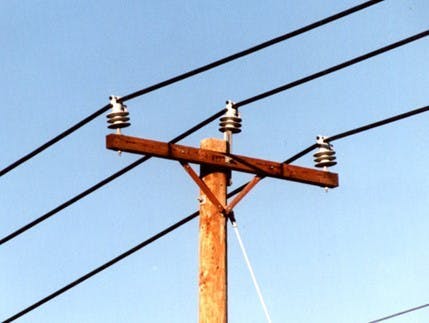
In spacer cable construction, the phase conductors are attached to a messenger by spacers, installed every 30 ft (10 m) along the messenger. The messenger is a high-strength alumoweld (AW) or alumoweld-aluminum (AWA) conductor, which has several functions. The messenger is the mechanical strength member, holding the phase conductors up. The messenger can also be used as a system neutral, serve as a lightning shield and provide a mechanical protection function by protecting the phase conductors from any items (such as leaves branches and trees) that can fall onto the bundle from above. The spacers are made of HDPE, as are the pin or line-post insulators used on the angles, to ensure dielectric compatibility with the phase conductors.

On the other hand, tree wire systems look more like bare wire construction. They use the same three-layer covered conductor design, but the phase conductors are usually either ACSR or AAAC (since they are fully self-supported and tensioned).

Tree wire systems are strung in an open wire configuration on crossarms with polyethylene insulators.
While there are numerous differences in operational effectiveness between spacer cable and tree wire systems, with regard to their efficacy as wildfire mitigation tools, the following three attributes of covered conductor systems directly help to mitigate the risk of power line-related ignitions in wildfire-prone areas:

  • If a covered conductor line blows into trees or branches, there is not enough contact current to cause ignition.
  • If a covered conductor line is impacted physically and falls to the ground, there is not enough current to ignite dry brush or other fuel that may be present.
  • If a covered conductor line falls to the ground and hits 
    a rock, the polyethylene covering does not cause a spark to be thrown (unlike a bare wire, where a spark and subsequent ignition of dry brush would be possible.)

The Differences

A few differences exist between spacer cable and tree wire systems with respect to wildfire mitigation effectiveness. If a tree wire configuration is used, an overhead tree could fall onto the line, abrade the conductor covering over time and result in a failure. This can reduce the attractiveness of tree wire in wildfire-prone areas that have an abundance of trees, in favor of spacer cable.

Additional differences arise in relation to the presence, removal and trimming of foliage, since spacer cable uses less right-of-way (ROW) than tree wire.

For the spacer cable configuration, even with fully compliant clearances, much more of the tree remains intact. The reduced ROW (and, hence, additional remaining foliage) does not increase the risk of ignition when using the spacer cable configuration. If branches become weighted down with wind or rain and touch the power bundle, they will be supported by the high-strength messenger, which is suitably grounded at every pole, or every other pole. This is one fundamental and vital function of the overhead messenger: to protect the phase conductors beneath it from objects that may fall on the power line from above.
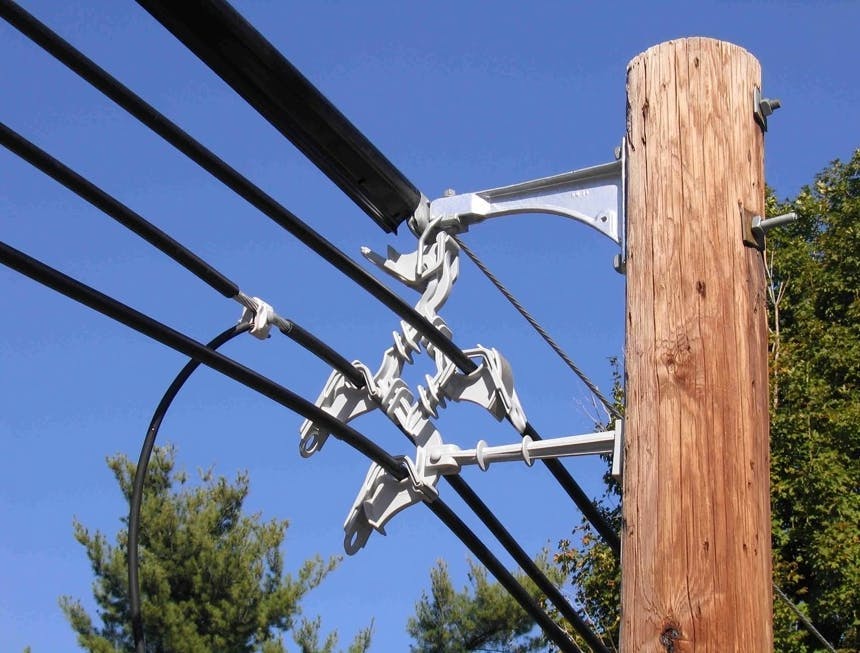
Not all power line-related wildfires initiate with branches falling from above. A significant part of the wildfire-prone landscape consists of dense scrub, tangled bushes and what is more commonly known as chaparral. These plants do not threaten power lines from up above but are a potent source of fuel for wildfires from below.

Further, there are cases of palm fronds being ignited by fire and traveling hundreds of yards with the wind. A palm frond flying between two phases of a bare wire system can be a concern. Note that fire is plasma and conducts electricity, since it is essentially an ionized gas consisting of ions and free electrons. If the ignited palm frond gets between the two bare wire phases, a flashover is likely. This could create a new wildfire location beneath the power line. The use of a covered conductor can prevent this scenario. As such, when there are no trees, it is viable to use covered conductor in a tree wire configuration.
Conversely, when trees are present, spacer cable is recommended because it will prevent ignition and protect the phase conductors from objects that threaten the power line from above and below.

Operational Strategy

Utilities can design power lines with covered conductor to minimize the potential for wildfire ignition. However, can this have ramifications for electric utility operational strategies during wildfire season? Common to wildfire-prone areas are public safety power shutoffs, whereby a utility can turn off the power if conditions (high winds, dry climes, high fuel load on the ground) indicate a wildfire is a possibility. At least one utility has stated that, in addition to its wildfire mitigation benefits, covered conductor has some public safety power shutoff benefits as well, raising the threshold for when to enact this to higher wind speeds than those used for bare wire systems.

The threat of wildfires being ignited by power lines is a reality for electric utilities. While bare wire, underground and covered conductor line designs all have mitigating strategies available in the design stage, those strategies also have their own costs and effectiveness (or lack thereof). Covered conductor systems, both spacer cable and tree wire, are proven and cost-effective design tools for wildfire mitigation.

Brian J. Trager (btrager@marmonutility.com) is a Senior Life Member of the IEEE. He received his BSEE and MSEE degrees from Rensselaer Polytechnic Institute in New York in 1978 and 1980, respectively, and a MBA degree in finance from the University of Pittsburgh in 1986. Trager has held various positions in engineering, consulting and management at American Electric Power Co., Cooper Power Systems and Fisher-Pierce, and most recently at Hendrix Wire and Cable, where he is currently employed as director, technology and international. He has taught electric power engineering at Ohio State University, West Virginia University and Pennsylvania State University, in addition to teaching courses to utility clients, and has authored over 75 technical papers and articles for the IEEE and other national and international organizations.
Source : https://www.tdworld.com/wildfire/article/21285075/system-hardening-with-aerial-covered-conductor

Thứ Tư, tháng 4 24, 2024

Chuyển đổi từ điện than sang điện hạt nhân - Câu chuyện của Hoa Kỳ, có gợi ý cho Việt Nam?

 Với mục tiêu đạt mức phát thải ròng bằng 0 vào năm 2050, Bộ Năng lượng Hoa Kỳ đã tiến hành nghiên cứu, khảo sát, đánh giá việc chuyển đổi các nhà máy nhiệt điện than thành các nhà máy điện hạt nhân. Kết quả cho thấy: Hàng trăm địa điểm nhà máy nhiệt điện than của nước này có thể được chuyển đổi sang nhà máy điện hạt nhân, giúp tạo thêm việc làm mới, tăng lợi ích kinh tế và cải thiện đáng kể điều kiện môi trường.

Thấy gì qua Báo cáo Điện lực 2024 của Cơ quan Năng lượng Quốc tế?Thấy gì qua Báo cáo Điện lực 2024 của Cơ quan Năng lượng Quốc tế?

Xu hướng dừng hoạt động các nhà máy nhiệt điện than cũ do chính sách chuyển dịch sang năng lượng sạch nhằm bảo vệ môi trường đang lan tỏa ở rất nhiều quốc gia. Tỷ lệ đóng góp của nhiệt điện than vào sản xuất điện ngày càng giảm, năm 2023 điện than đóng góp 675 tỷ kWh, và chúng đang dần được thay thế bằng các công nghệ sản xuất điện khác (sử dụng khí tự nhiên, hoặc năng lượng tái tạo).

Năng lượng hạt nhân đang được xem là công nghệ sạch rất phù hợp cho vai trò thay thế các nhà máy nhiệt điện than. Ứng dụng các công nghệ lò phản ứng hạt nhân tiên tiến, đặc biệt là các lò phản ứng hạt nhân dạng mô-đun cỡ nhỏ (SMR) thay thế cho các nhà máy nhiệt điện than đã cũ, hoặc dừng hoạt động đang là một trong những ứng dụng tiềm năng giúp mục tiêu không phát thải cacbon của ngành điện trở nên khả thi.

Báo cáo “Điều tra về lợi ích và thách thức của việc chuyển đổi các nhà máy than ngừng hoạt động sang nhà máy điện hạt nhân” được Bộ Năng lượng Hoa Kỳ (DOE) thực hiện vào năm 2022. Các nhóm nghiên cứu của DOE đã sử dụng công cụ OR-SAGE kết hợp công nghệ GIS để đánh giá và sàng lọc các địa điểm tiềm năng dựa trên nhiều tiêu chí khác nhau bao gồm: Mật độ dân số, hoạt động địa chấn, khả năng ngập lụt và khoảng cách gần với nguồn nước làm mát, các mối nguy hiểm trong bán kính 0,8km đến 1,6km để đánh giá tính phù hợp của chúng đối với các lò phản ứng tiên tiến. Công cụ này mang lại tính linh hoạt trong việc đánh giá địa điểm không chỉ cho các nhà máy điện hạt nhân mà còn cho các loại hình sản xuất điện khác.

Kết quả đánh giá xác định được 157 địa điểm nhà máy than đã ngừng hoạt động và 237 địa điểm nhà máy than đang hoạt động là những ứng cử viên tiềm năng cho quá trình chuyển đổi. 80% trong số những địa điểm này phù hợp để đặt các nhà máy điện hạt nhân tiên tiến (bao gồm cả việc trang bị thêm tổ máy hạt nhân tại các nhà máy than hiện đang vận hành, hoặc phù hợp cho việc xây dựng nhà máy điện hạt nhân công suất lớn).

Bảng dưới đây là các đặc điểm nhà máy nhiệt điện than cần được xem xét khi chuyển đổi sang nhà máy điện hạt nhân:

Đặc điểm

Phạm vi/tùy chọn

Giải thích

Khả năng tương thích với địa điểm và các thành phần điện

Công suất địa điểm

10 MW - 3737 MW

Tác động đến quy mô tổng sản lượng điện hạt nhân mà không cần nâng cấp đường dây truyền tải và tác động đến lượng nhiệt thải thải ra môi trường

Tuổi đời nhà máy nhiệt điện than và các điều kiện môi trường

Từ mới đến cũ hoặc đã ngừng hoạt động

Tác động đến mức độ dọn dẹp cần thiết

Khả năng tương thích với các thành phần của chu trình hơi

Công nghệ chu trình

Dưới tới hạn

Siêu tới hạn

Trên siêu tới hạn

Tác động tới khả năng tái sử dụng các thiết bị của chu trình hơi

Công suất tổ máy

< 1,4 GW

Tác động đến kích thước của máy phát điện hạt nhân nếu muốn tái sử dụng các bộ phận của tuabin và máy phát điện

Khả năng tương thích với các bộ phận giải nhiệt

Vòng làm mát

Hệ thống làm mát cơ học

Làm mát khô

Tháp giải nhiệt tự nhiên

Tác động đến việc dễ dàng tái sử dụng các bộ phận giải nhiệt hoặc cần xây mới hệ thống làm mát, hoặc sử dụng làm mát bằng không khí

Bên cạnh các yếu tố về mặt địa điểm, DOE đã nghiên cứu các tác động kinh tế và môi trường dựa trên việc đánh giá một địa điểm nghiên cứu điển hình giả định ở khu vực Trung Tây Hoa Kỳ với các kịch bản sử dụng lò phản ứng tiên tiến của NuScale và TerraPower. Các công ty này đang nỗ lực thương mại hóa và triển khai các lò phản ứng SMR với các ưu điểm (có mức vốn đầu tư ban đầu thấp hơn, khả năng mở rộng và tính linh hoạt về địa điểm cao hơn so với các lò phản ứng công suất lớn truyền thống).

TerraPower đang có kế hoạch xây dựng lò phản ứng hạt nhân trình diễn sử dụng muối Natri gần một nhà máy nhiệt điện than sắp ngừng hoạt động ở Kemmerer, bang Wyoming. Đây sẽ là dự án chuyển đổi thử nghiệm đầu tiên của Hoa Kỳ.

Tùy thuộc vào công nghệ được sử dụng, chi phí đầu tư xây dựng của các dự án chuyển đổi này có thể giảm từ 15% đến 35% khi so sánh với một dự án xây dựng mới nhờ việc tái sử dụng cơ sở hạ tầng của nhà máy nhiệt điện than. Những tài sản này bao gồm địa điểm hiện có, các thiết bị điện của nhà máy nhiệt điện than (đấu nối lưới điện, trạm phân phối v.v...), hệ thống cung cấp nước làm mát, hệ thống khử khoáng, nước dịch vụ, hệ thống phòng cháy chữa cháy và cơ sở hạ tầng dân dụng (như đường sá và các tòa nhà).

Chuyển đổi từ nhiệt điện than sang điện hạt nhân - Câu chuyện của Hoa Kỳ, có gợi ý cho Việt Nam?
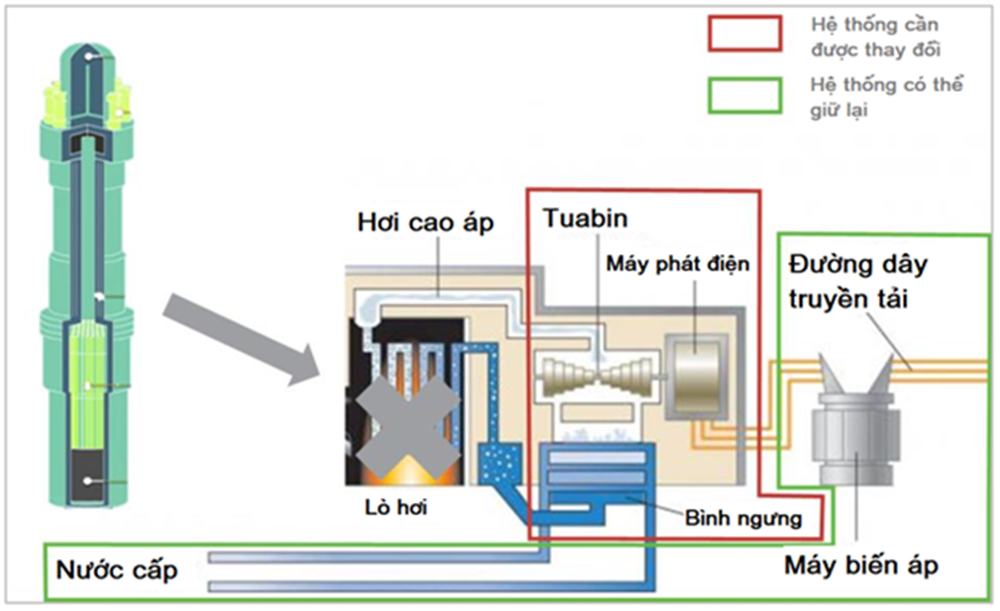
Sơ đồ sử dụng các hệ thống khi chuyển đổi từ nhà máy điện than sang nhà máy điện hạt nhân (Nguồn: Internet).

Kết quả tính toán cho trường hợp thay thế một nhà máy điện than công suất 1.200 MWe bằng lò phản ứng hạt nhân 924 MWe của NuScale cho thấy: Dự án có thể tạo thêm 650 việc làm mới lâu dài cho địa phương và đem lại 275 triệu USD nhờ các hoạt động kinh tế mới. Những nghề nghiệp sẽ thu được lợi ích lớn nhất từ quá trình chuyển đổi từ than sang hạt nhân (bao gồm kỹ sư hạt nhân, nhân viên vận hành lò phản ứng, kỹ thuật viên hạt nhân, đội ngũ an ninh, giám sát v.v...). Các dự án này cũng có thể được hưởng lợi từ lực lượng lao động có kinh nghiệm trong các cộng đồng xung quanh các nhà máy nhiệt điện than ngừng hoạt động.

Phân tích chuyển đổi lực lượng lao động của báo cáo đã nêu bật những thách thức, cùng như cơ hội đối với lực lượng lao động ngành than trong quá trình chuyển đổi sang các vị trí liên quan đến hạt nhân và nhấn mạnh tầm quan trọng của việc đầu tư vào đào tạo, hỗ trợ người lao động trong giai đoạn chuyển tiếp.

Chuyển đổi từ nhiệt điện than sang điện hạt nhân - Câu chuyện của Hoa Kỳ, có gợi ý cho Việt Nam?
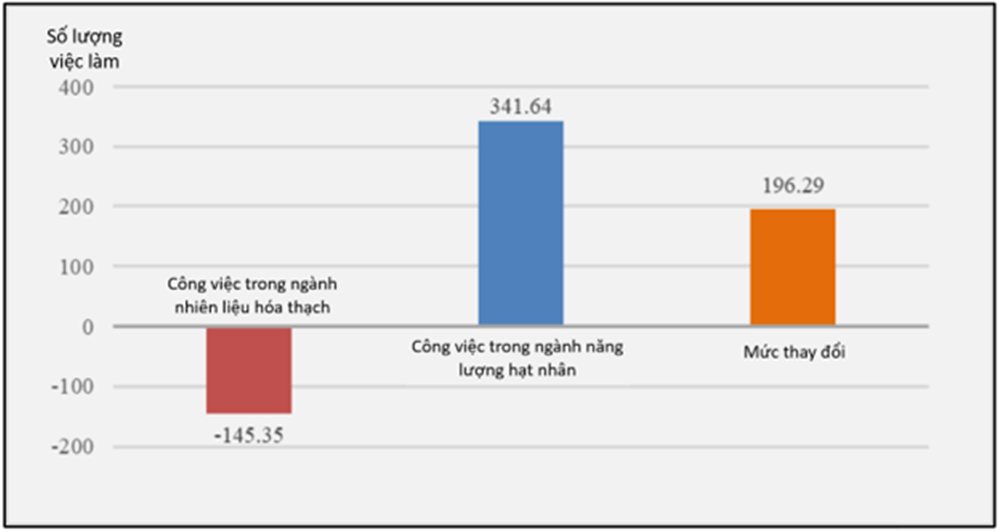
Sử dụng phương pháp BLS và dữ liệu nghề nghiệp IMPLAN cho thấy sự giảm 150 việc làm trong ngành than và gia tăng 350 việc làm trong ngành hạt nhân. [2]

Theo Bộ Năng lượng Hoa Kỳ: Hiện đã có tới 11 bang công khai bày tỏ sự quan tâm đến việc tái sử dụng các địa điểm nhà máy nhiệt điện than của họ cho năng lượng hạt nhân. Những tiểu bang này bao gồm: Arizona, Colorado, Kentucky, Maryland, Montana, North Carolina, Pennsylvania, Utah, West Virginia, Wyoming và Wisconsin. Quá trình chuyển đổi từ than sang hạt nhân có thể tăng tổng công suất điện hạt nhân ở Hoa Kỳ lên hơn 350 GW so với công suất hiện tại là 95 GW và chiếm một nửa công suất điện sạch của quốc gia này.

Gợi ý hay cho Việt Nam trong tương lai gần:

Việt Nam cũng đang trong quá trình chuyển đổi năng lượng mạnh mẽ nhằm giảm ô nhiễm không khí, giảm phát thải và phát triển bền vững theo các cam kết với cộng đồng quốc tế.

Việc ứng dụng năng lượng hạt nhân đã từng được Việt Nam nghiên cứu nhiều năm trước. Các nghiên cứu cũng đã cho thấy nhiều đặc điểm ưu việt của điện hạt nhân. Trong đó bao gồm sự không gây ô nhiễm không khí, cũng như không phát thải khí nhà kính khi vận hành các nhà máy điện hạt nhân. Tuy nhiên, điện hạt nhân đang có những rào cản như việc phải vay vốn đầu tư rất lớn, sự phụ thuộc vào công nghệ nước ngoài, phụ thuộc vào nhiên liệu nhập khẩu, lo ngại về an toàn bức xạ hạt nhân khi sự cố v.v… đã dẫn đến việc Quốc hội dừng chủ trương phát triển các nhà máy điện hạt nhân vào cuối năm 2016. Sau đó là việc hủy bỏ địa điểm lựa chọn xây dựng nhà máy điện hạt nhân.

Quy trình đánh giá tác động để chọn địa điểm cho nhà máy điện hạt nhân hiện rất chặt chẽ và chưa phân biệt lò to, hay nhỏ. Nhưng chúng ta thấy, gần đây những tiến bộ về công nghệ, an toàn và nhất là loại nhà máy điện hạt nhân mô đun nhỏ (SMR) đang là những cơ hội tiềm năng để chúng ta xem xét việc thay thế các nhà máy điện than cũ bằng điện hạt nhân công nghệ mới, góp phần thúc đẩy quá trình chuyển đổi năng lượng hiệu quả.

Do đó, chuyển đổi từ nhà máy nhiệt điện than sang nhà máy điện hạt nhân - câu chuyện của Hoa Kỳ có thể là những gợi ý hay cho Việt Nam trong tương lai gần./.

PHẠM ĐỨC TRUNG (TỔNG HỢP, LƯỢC DỊCH)

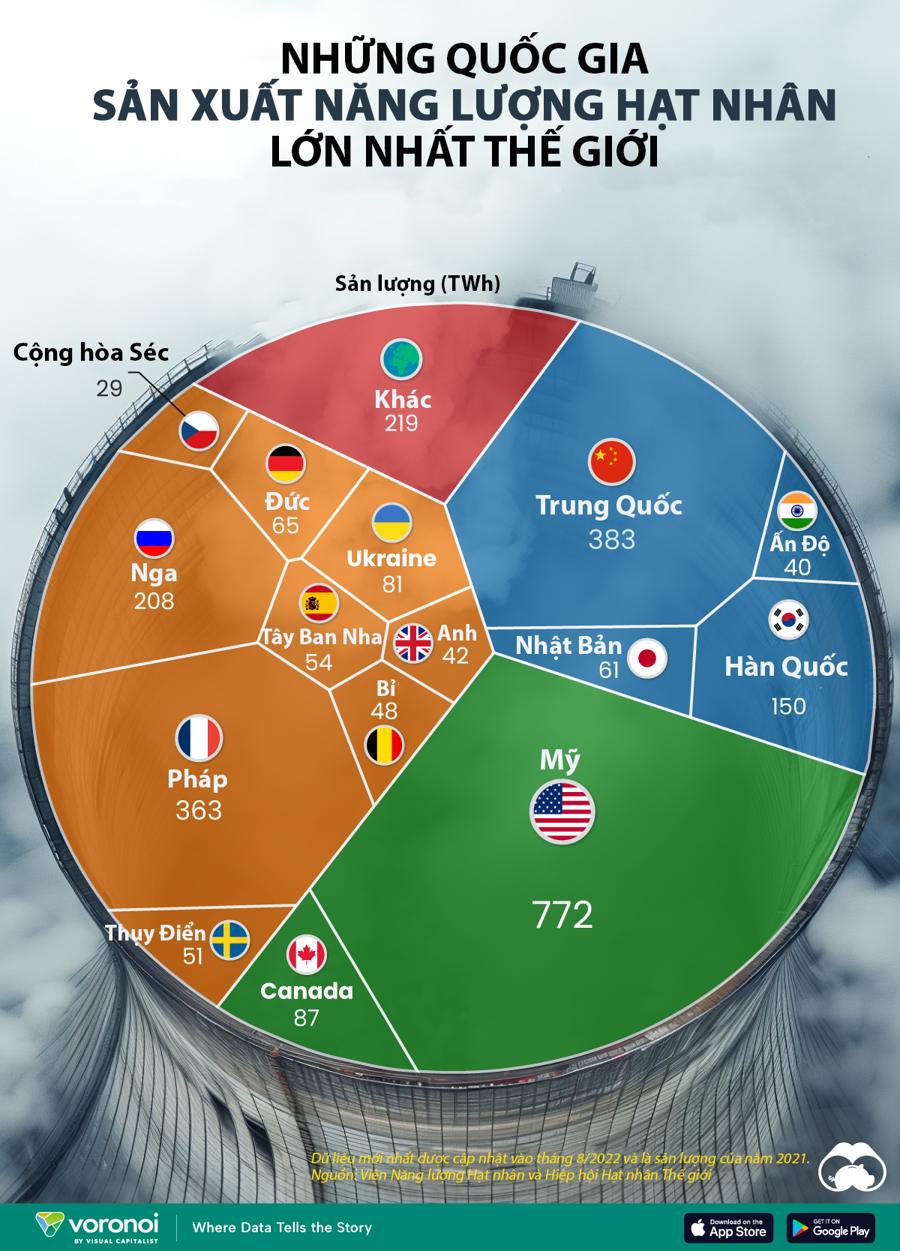
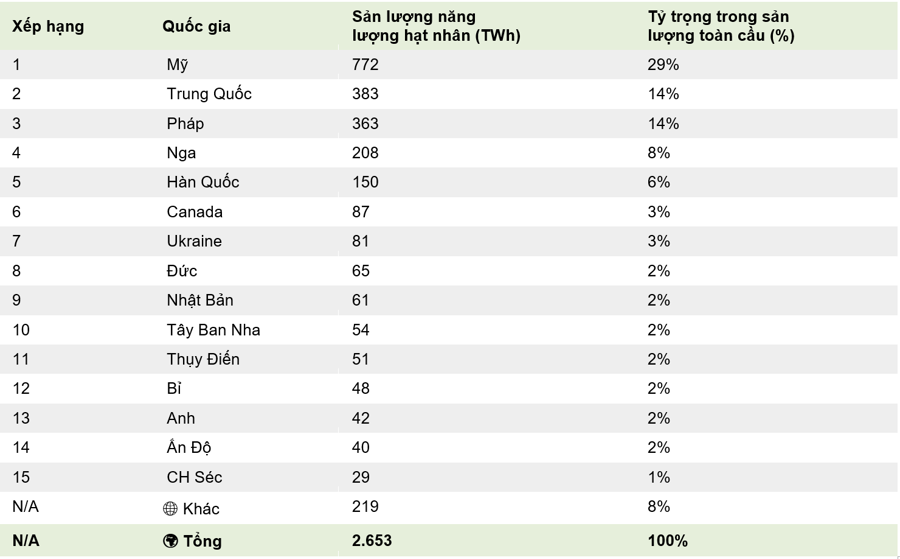
15 nước sản xuất năng lượng hạt nhân lớn nhất thế giới


15 nước sản xuất năng lượng hạt nhân lớn nhất thế giới - Ảnh 1
15 nước sản xuất năng lượng hạt nhân lớn nhất thế giới - Ảnh 2

Chủ Nhật, tháng 4 21, 2024

Components, Processes, and Costs of an Offshore Wind Farm Development


Components, Processes, and Costs of an Offshore Wind Farm Development

Developing offshore wind farms is a multifaceted process that comprises several components and stages. The development stages encompass site selection, feasibility studies, surveys, design and engineering, regulatory compliance, financing, procurement, construction, and commissioning, culminating in the handover to operation and maintenance, as depicted in the following mind map.
The following chart illustrates the typical cost range for the various components and processes involved in the development of offshore wind farms. It is crucial to note that the cost ranges are approximate and may fluctuate based on specific projects and local conditions. As turbine capacity increases, the number of turbines required for a given project decreases, leading to reduced development costs and operational and maintenance expenses.
Việc phát triển dự án điện gió ngoài khơi là quá trình phức tạp bao gồm nhiều thành phần và giai đoạn. Giai đoạn phát triển bao gồm việc lựa chọn địa điểm, nghiên cứu khả thi, khảo sát, thiết kế và kỹ thuật, tuân thủ quy định pháp luật, tài chính, mua sắm, lắp đặt và đưa vào vận hành, cho đến khi chuyển giao cho vận hành và bảo trì, như được mô tả trong sơ đồ dưới đây.
Ngoài ra, tôi có tổng hợp thêm 1 biểu đồ thể hiện chi phí điển hình cho các thành phần và quy trình liên quan đến việc phát triển các trang trại gió ngoài khơi. Điều quan trọng cần lưu ý là chi phí này chỉ là ước lượng và sẽ biến động do các điều kiện đặc thù của một dự án. Khi công suất của WTG tăng lên, số lượng WTG cần thiết cho một dự án sẽ giảm đi, dẫn đến giảm chi phí phát triển và chi phí vận hành và bảo trì sau này.

TheoFb

Thứ Bảy, tháng 4 20, 2024

IAEA Conference on Enhancing the Operational Safety of Nuclear Power Plants Starts in China

 formation and Communication

The IAEA’s Lydie Evrard, Deputy Director General and Head of the Department of Nuclear Safety and Security, giving her opening address to the International Conference on Enhancing the Operational Safety of Nuclear Power Plants. (Photo: Chinese Nuclear Energy Association)

An IAEA conference on improving the operational safety of nuclear power plants started in Beijing today, to continue strengthening international collaboration and promoting ‘safety culture’ to further reduce risks of a nuclear incident. 

“Ensuring the safe and reliable operation of the existing nuclear power plants is a priority, to protect people and the environment,” said the IAEA’s Lydie Evrard, Deputy Director General and Head of the Department of Nuclear Safety and Security in her opening address. “It is also the foundation for the long-term safe development of the nuclear power industry and of new designs such as small modular reactors, that will contribute to realize the goal of tripling nuclear power by 2050 and NetZero,” she added. 

The chairman of the conference, EDF Chief Representative in China Fabrice Fourcade, spoke of how the nuclear industry will only meet its potential if it focuses on two things: safety and competitiveness. 

“Nuclear is a safe, efficient and low-carbon technology,” he said. “I echo the words of Ms. Evrard that the safe and reliable operation of nuclear power plants, was, is and will remain the cornerstone for the long-term development of the nuclear power industry.” 

The conference will encourage the exchange of information about enhancing safety during commissioning, start-up and medium and long-term operation of nuclear power plants.  

Participants include representatives of new and existing nuclear plant operators, regulators, technical support organizations, construction companies and other similar organizations. The conference is being organized by the IAEA and hosted by the China Nuclear Energy Association and China’s Atomic Energy Authority. The conference is the fifth in a series of IAEA conferences on operational safety. 

“The IAEA safety standards for nuclear and radiation safety include a range of safety standards on the commissioning and operation of nuclear power plants. These often form the backbone for national regulations of our Member States and are used as the basis for the Agency’s peer review and advisory services,” explained Evrard. 

“The IAEA’s safety peer review missions continue to highlight areas for further improvement such as further enhancements in safety culture – for example by providing an environment where safety concerns can be discussed in an open and transparent manner and resolved effectively,” she added. 

The conference will cover the role of strong leadership in enhancing safe operations and establishing a positive safety culture, opportunities and lessons learned from new plant construction and commissioning, the role of corporate oversight, the lessons learnt from the long term operation of plants, case studies and operating experience feedback.   

Alongside a range of technical sessions on the above topics, side events are also celebrating the 40th anniversary of both China’s membership in the IAEA and the establishment of the Chinese National Nuclear Safety Administration. 

Source: https://www.iaea.org/newscenter/news/iaea-conference-on-enhancing-the-operational-safety-of-nuclear-power-plants-starts-in-china


Thứ Sáu, tháng 4 19, 2024

Dự án thuỷ điện hơn 730 tỷ đồng tại Bình Định chính thức vận hành thương mại


Dự án nhà máy thủy điện tại Bình Định do Công ty cổ phần Thủy điện Nước Lương làm chủ đầu tư với công suất 22MW.

Thông tin từ Tổng công ty Điện lực miền Trung, dự án nhà máy thủy điện Nước Lương tại tỉnh Bình Định đã hoàn thành và chính thức vận hành thương mại. Dự án có tổng mức đầu tư là 737,6 tỷ đồng.

Cụ thể, ngày 21/3, Tổng công ty Điện lực miền Trung đã có văn bản thống nhất ngày vận hành thương mại và phát điện chính thức kể từ lúc 13h30 ngày 24/2 đối với dự án nhà máy thủy điện Nước Lương.

Dự án nhà máy thủy điện Nước Lương do Công ty cổ phần Thủy điện Nước Lương làm chủ đầu tư, tại xã Đak Mang và Ân Sơn thuộc huyện Hoài Ân, tỉnh Bình Định; có công suất 22MW (gồm có 2 tổ máy phát điện với công suất mỗi tổ máy là 11MW). Đập chính được xây dựng trên dòng suối Đăk Mang và 2 đập phụ xây dựng trên suối Nước Trong và suối Nước Lương.

Điện năng phát ra từ nhà máy sẽ hòa vào lưới điện quốc gia qua đường dây 110kV, đấu nối chuyển tiếp tại vị trí cột 45 trên đường dây 110kV Vĩnh Sơn – Hoài Nhơn, mạch kép với chiều dài 10,1km. Dự kiến sản lượng điện khoảng 68,39 triệu kWh/ năm.

Dự án được khởi công từ tháng 5/2022. Đến tháng 2/2024, khối lượng thi công của toàn bộ dự án đã hoàn thành, các hạng mục công trình đã được các Hội đồng nghiệm thu chuyên ngành thực hiện theo đúng theo quy định. Công tác nghiệm thu vận hành 72h của 2 tổ máy đã hoàn thành vào lúc 13h30 ngày 24/2/2024.

Theo Quy hoạch tỉnh Bình Định, dự án thủy điện Nước Lương sẽ được nâng công suất lắp máy từ 22MW lên 27MW.

TheoNguoiquansat

Thứ Năm, tháng 4 18, 2024

Reimagining The Future Grid


Governmental inducements along with private investments are having a major impact in every sector of the grid. The DOE calls it 'reimagining and rebuilding the power grid,' and it's coming at an opportune time It’s not, however, without its challenges

 Modernizing and decarbonizing the power delivery system has never been for the fainthearted, but incentives are definitely making it more palatable. Federal and state governments have made available billions of dollars in financial inducements and tax credits. Utilities, grid operators and their customers have access to mechanisms  like the IRA (Inflation Reduction Act), IIJA (Infrastructure Investment and Jobs Act) and state tax related tax inducements. There are also grants from the Department of Agriculture to encourage rural and tribal utilities to deploy renewable energy systems.

These measures are providing stimulus that’s encouraging clean-energy and the more efficient use of that energy. The incentives are seen as a once-in-a-lifetime boost to upgrade the power system and improve the efficiency of power consumption. Distribution energy resources (DERs) are critical elements in this process and the consumers taking advantage of them. Governmental inducements along with private investments are having a major impact in every sector of the grid. The Department of Energy (DOE) calls it “reimagining and rebuilding the power grid,” and it's coming at an opportune time It’s not, however, without its challenges.

Success is Costly 

Interestingly, the customers’ purchases of electric vehicles (EVs) and chargers, heat pumps, DERs, and other efficient devices is having a surprising effect. It’s been reported that after several decades of flat electrical demand, the power grid is now experiencing an increase in demand, which is approximately 4.7% per year. A recent Washington Post headline said, “Amid explosive demand, America is running out of power.” The gist of the story was that utilities are scrambling to find more capacity in their aging transmission grids and distribution networks.

In addition to those future grid reimagining issues there is the pesky fact that the environment has not reached the new normal, climate change is still accelerating. The agencies setting policy to deal with this are shifting targets on what needs to be accomplished and/or when. Recently, one body said the world must add or replace about 50 million miles (80 million km) of transmission lines by 2040 to meet the world’s climate goals. Another group set 2030 as the necessary date for tripling the world’s installed renewable energy capacity to meet climate challenges, which in tangible terms is approximately 11,000 gigawatts.

The bottom line here is that there are a lot of thorny issues to deal with and shifting goals are better than the alternative. As long as global warming and climate change continue growing, the targets and goals need to be shifting. Thankfully the technological toolbox is bulging with adjustable techniques for addressing those quirky issues. One of the most adaptable are the grid enhancing technologies (GETs). They are designed to move right along with the varying targets and keep them within reach (see “The Impossible Takes Longer,” December 2023, T&D World for details).

It's All Manageable 

DOE says GETs “maximize the electricity transmission across the existing system.” These technologies include dynamic line rating systems, power-flow control systems, smart meters, and energy management systems (EMS) to name a few. Their aim is to meet the growing demands without necessarily having to build more time consuming infrastructure. GETs cover a great deal of smart grid applications, so let’s concentrate on one of them attracting attention: the advanced EMS. These platforms are becoming so popular that they can be found at all levels of the grid, from the transmission system to the distribution network and beyond.

Some are designed for specific utility customer types (i.e., industrial, commercial, and residential applications) while others are suitable for grid-scale operations. This set of technologies takes advantage of cloud computing, sophisticated software, and artificial intelligence. Real-time data and analytics provide the technology with advantages over the more traditional methods. Controlling all elements of a power grid transitioning to a modern interconnected system can be simple or complicated depending on the sophistication of the system doing the managing.

With that in mind, “Charging Ahead” contacted Hitachi Energy’s Michael Atkinson, Senior Vice President Grid Automation: North America Market, to understand the technology firsthand. Our discussion began with Mr. Atkinson saying, “Not too long ago we ran the power grid with 15% to 20% spare capacity because we really didn’t have good control, metering, measuring, etc. to operate it with less of a cushion. As technologies improved, it was possible to operate with closer margins and operating margins were reduced to 10% and in many cases around 7%. But the success came with costs, and you can only control so many elements at the transmission level.”

Atkinson continued, “When digital technologies found their way to the distribution level, advanced distribution management systems (ADMS) were required by the distribution network. As the distribution system became more diverse and multi-directional with greater deployments of distributed energy resources (DERs) and energy storage, it became apparent a third level of control was needed. It was also evident that the control had to be much closer to those assets. For efficient operation, these controls had to know exactly what was going on and where they were as opposed to an average understanding of an overall view. Hitachi Energy’s e-mesh was designed to operate with that level of accuracy.”

Atkinson explained, “e-mesh is specifically designed to manage multiple sources such as renewables, conventional power generation, DERs, and controllable loads like relays and electric vehicle (EV) chargers. In addition, leveraging the e-mesh PowerStore battery energy storage system (BESS), it can better manage these assets to solve the technical problems of the day. The e-mesh portfolio can improve power import capabilities while supplying frequency support, voltage control, and reactive power support. The combination also stores clean power generated overnight by wind turbines for use when the load is going up during the day. Customers are finding value in the non-wire options available.”

Atkinson pointed out, “The grid has been under invested in for years, which has led to problems providing the capacity needed for the influx of renewable energy generation and new electric loads like EVs, but that’s changing. Using the e-mesh portfolio to unlock the benefits of BESS delivers the ability for renewable shifting and peak shaving for base load leveling. The technology has been configured to function as a microgrid for islands in the event of extreme weather, as one example. Microgrids have also allowed utilities to delay the need for reconductoring an existing feeder. In some cases, the microgrid is a more cost-effective alternative to building another line for a remote load, which helps to defer capital investment and stretch the operating budget.”

Growing Market

EMS platforms offer a versatility needed for reimagining the future grid, which explains why they are generating so much global interest. Advanced EMS platforms with connectiveness provide the situation awareness needed for climate change. It helps that utilities add renewables plus storage, which makes those installations more efficient. A good example is PG&E’s Calistoga substation microgrid. The 293 megawatt-hour microgrid consists of a hybrid-hydrogen fuel cell and a BESS that can supply power for up to 48 hours. The system is controlled by Energy Vault’s advanced EMS platform and is expected to be in service in 2024.

Late last year, Baltimore Gas and Electric (BGE) energized its Fairhaven substation’s 2.5 megawatt BESS to meet high electricity demands during the winter months. The BESS is a Hitachi Energy e-mesh and PowerStore BESS scalable microgrid. BGE installed the system to improve year round reliability and solve a specific winter peaking issue. This area had a spike in winter demand due to the customers’ use of electric heating. There were times that demand surpassed the capacity of the single 34.5 kV line feeding the area. Hitachi Energy’s EMS and BESS solved the problem and allowed BGE to forego the expensive underground upgrades for 10 miles of electric distribution equipment.

The potential for EMS platforms has come into focus at last, which is good for both the technology and the power grid. According to MarkertsandMarkets’ 2023 research report “Energy Management System Market,” the global EMS market size was estimated at US$40.7 billion in 2023. It’s projected to grow at a 13.2% CAGR (compound annual growth rate) reaching US$75.6 billion by 2028. It will be interesting to see how the revised targets for millions of miles of transmission and thousands of gigawatts of renewables will affect these spending projections.

Those global warming goals moved to 2030 are somewhat unsettling. After all, 2030 is less than six years away, but maybe that’s not as bad as it seems. Humans tend to ignore project schedules with long due dates such as the 2050 climate change goals. Maybe a five-year goal will inspire action; ultimately we are talking about reimagining the future grid. It’s like that old saying, “the longest journey starts with the first step.” Luckly these advanced EMS platforms are off-the-shelf items and are available worldwide from a variety of suppliers. Reimagining the future grid is possible with tools like these!

 TheoTDworld