Thứ Bảy, tháng 2 29, 2020
Thứ Sáu, tháng 2 28, 2020
Wind plus storage critical for renewable energy transition

A new report from Navigant Research shows that despite the limited number of combined wind plus storage projects, the pairing of these technologies is critical to achieving a greater reliance on renewable energy generation.
The rise of combined solar plus storage projects is reshaping the energy storage industry, yet employing energy storage for wind integration has fallen far behind.
“The links between wind and energy storage projects remain far less established than storage for solar PV as a result of both technical and economic factors,” says Alex Eller, senior research analyst at Navigant Research. “Although combined wind plus storage projects offer similar benefits and potential, little development has taken place thus far for these combined projects.”
Read more
Queensland approves Australia’s largest wind farm
Pivot Power places order with Wärtsilä for 100 MW of energy storage
Queensland approves Australia’s largest wind farm
Pivot Power places order with Wärtsilä for 100 MW of energy storage
In order to launch more successful projects, the report recommends wind and energy storage operators invest in robust software to effectively pair the technologies with accurate wind output forecasts and market pricing.
Stakeholders will also need to explore new revenue streams to address reductions or outright eliminations of subsidies for wind plants, as well as maximize the use of existing transmission networks. Additionally, wind farm developers should partner early with leading storage providers to identify cost-effective sites for potential projects and viable revenue streams.
The report, Optimizing Wind Power Plants with Energy Storage, aims to provide an in-depth look at the drivers and challenges for this growing market.
Specific attention is paid to the applications of energy storage for wind integration, existing and upcoming projects, the competitive landscape, and how this market is expected to grow over the next decade.
Thứ Tư, tháng 2 26, 2020
Công suất các nhà máy điện than sẽ giảm còn 8.760 MW vào năm 2025

Đến năm 2025, nguồn nhiệt điện than chiếm khoảng 37,1% tổng công suất lắp đặt nguồn điện, giảm 13% so với Quy hoạch điện VII điều chỉnh.
Ảnh minh họa. (Nguồn: TTXVN)
Ban Chỉ đạo Quốc gia về phát triển điện lực cho biết, so với Quy hoạch điện VII điều chỉnh, trong cơ cấu nguồn điện mới có công suất nhiệt điện than sẽ giảm 8.760 MW vào năm 2025 và giảm 6.340 MW vào năm 2030, chủ yếu do các dự án chậm tiến độ và một số địa phương không đồng thuận phát triển nhiệt điện than.
Như vậy, năm 2020, nguồn nhiệt điện than sẽ chiếm khoảng 33,2% tổng công suất lắp đặt nguồn điện, giảm gần 6.000 MW so với Quy hoạch điện VII điều chỉnh; nhiệt điện khí, dầu chiếm 14,8%, không thay đổi so với Quy hoạch điện VII điều chỉnh; thủy điện chiếm 30,1%, thủy điện nhỏ và năng lượng tái tạo chiếm 20,3%, cao hơn Quy hoạch điện VII điều chỉnh 10,3%. Tổng điện năng của điện gió và điện mặt trời đến năm 2020 đạt 12 tỷ kWh, vượt Chiến lược phát triển năng lượng tái tạo khoảng 3 lần.
Đến năm 2025, nguồn nhiệt điện than chiếm khoảng 37,1% tổng công suất lắp đặt nguồn điện, giảm 13% so với Quy hoạch điện VII điều chỉnh; nhiệt điện khí chiếm 13,7%, không thay đổi so với Quy hoạch điện VII điều chỉnh; thủy điện chiếm 18,2%, thủy điện nhỏ và năng lượng tái tạo chiếm 25,5%, cao hơn Quy hoạch điện VII điều chỉnh gần 13%.
Tổng sản lượng của điện gió và điện mặt trời đến năm 2025 sẽ đạt 36 tỷ kWh, vượt Chiến lược phát triển năng lượng tái tạo khoảng 2,6 lần.
Sang năm 2030, nguồn nhiệt điện than chiếm khoảng 33,6% tổng công suất lắp đặt nguồn điện, giảm 9% so với Quy hoạch điện VII điều chỉnh; nhiệt điện khí chiếm 19%, tăng 4% so với Quy hoạch điện VII điều chỉnh; thủy điện chiếm 13%; thủy điện nhỏ và năng lượng tái tạo chiếm 27%, cao hơn Quy hoạch điện VII điều chỉnh 6%.
Về cơ cấu điện năng, nhiệt điện than chiếm 42%, thấp hơn Quy hoạch điện VII điều chỉnh 11%; nhiệt điện khí chiếm 27,5%, tăng 10% so với Quy hoạch điện VII điều chỉnh; thủy điện chiếm 12,5%; thủy điện nhỏ và năng lượng tái tạo chiếm 14%, cao hơn Quy hoạch điện VII điều chỉnh 4%; nhập khẩu điện 4% , tăng 3% so với Quy hoạch điện VII điều chỉnh.
Tổng sản lượng của điện gió và điện mặt trời đến năm 2030 đạt 55 tỷ kWh, vượt Chiến lược phát triển năng lượng tái tạo 4 tỷ kWh.
Đến năm 2030, công suất của các nhà máy điện sử dụng khí LNG là 12.750 MW (không tính các nhà máy cũ chuyển sang sử dụng khí LNG); trong đó 6.000 MW đã được quy hoạch trong Quy hoạch điện VII điều chỉnh gồm các nhà máy điện: Nhơn Trạch 3 và 4 (công suất 1.500 MW); Sơn Mỹ I và II (4.500 MW).
Trong tính toán này, theo Ban Chỉ đạo, Nhà máy điện Kiên Giang (1.500 MW) - trong Quy hoạch điện VII điều chỉnh được quy hoạch sử dụng khí lô B phải chuyển sang sử dụng khí LNG. Theo số liệu cập nhật của Bộ Công Thương, khí lô B chỉ đủ cung cấp cho Trung tâm điện lực (TTĐL) Ô Môn nên nhà máy điện Kiên Giang, nếu xây dựng, thì phải chuyển đổi sang sử dụng khí LNG.
Theo Ban Chỉ đạo, địa điểm và phương án xây dựng nguồn cấp khí LNG cho nhà máy điện Kiên Giang không được đánh giá cao, nên cần thiết phải đánh giá, xem xét địa điểm khác thuận lợi hơn tại miền Nam để thay thế cho nhà máy này.
Như vậy, giai đoạn 2026-2030, tổng công suất các nhà máy điện sử dụng khí LNG cần bổ sung vào quy hoạch là 6.750 MW. Ngoài phát triển ở miền Nam, cần xem xét nghiên cứu phát triển các nhà máy điện sử dụng khí LNG khu vực miền Bắc để thay thế cho các nhà máy điện than Hải Phòng 3 và Vũng Áng 3.
Ngoài các nhà máy điện mới sử dụng LNG, các nhà máy điện hiện có thuộc TTĐL Phú Mỹ, Bà Rịa, Hiệp Phước, từ năm 2021 sẽ chuyển dần sang sử dụng khí LNG do nguồn khí Đông Nam Bộ cạn kiệt. Đến năm 2030, tổng công suất các nhà máy điện đang sử dụng khí Đông Nam Bộ phải chuyển đổi sang sử dụng LNG là khoảng 4.200 MW.
Tổng công suất nguồn điện mặt trời dự kiến phát triển đến năm 2025 là 14.450 MW, đến năm 2030 là 20.050 MW. Theo Ban Chỉ đạo, hiện tại đã bổ sung vào quy hoạch 10.300 MW công suất. Như vậy, giai đoạn 2021-2025 cần bổ sung khoảng 4.000 MW (tương ứng 5.000 MWp), giai đoạn 2026-2030 cần bổ sung thêm khoảng 5.600 MW (7.000 MWp).
Bên cạnh đó, tổng công suất nguồn điện gió dự kiến phát triển đến năm 2025 cũng là 6.030 MW, đến năm 2030 là 10.090 MW. Hiện tại đã bổ sung vào quy hoạch 4.800 MW, theo Ban Chỉ đạo, giai đoạn 2021-2025 cần bổ sung khoảng 1.200 MW, giai đoạn 2026-2030, bổ sung 4.000 MW.
Ban Chỉ đạo cũng cho biết, giai đoạn 2021-2025 cần bổ sung quy hoạch 2.500 MW điện nhập khẩu từ Lào, giai đoạn 2026-2030, bổ sung 2.400 MW cũng từ Lào.
Ngoài ra, để tích hợp khối lượng lớn nguồn điện gió và mặt trời trên, ngoài nhà máy thủy điện tích năng (1.200 MW) đã được quy hoạch, giai đoạn 2021-2025 cần bổ sung 1.200 MW pin tích năng, giai đoạn 2026-2030 cần bổ sung 3.000 MW pin tích năng tại miền Nam./.
Mai Phương (TTXVN/Vietnam+)
Thứ Bảy, tháng 2 15, 2020
New energy innovations to make the future brighter
1. An Australian company has been working on a system that uses underwater buoys to convert sea waves into zero-emission energy and desalinated water. 2. Scientists in China are producing solar panels that can produce energy from the last source you’d expect — rainwater. 3. A Japanese engineer has designed a new type of wind turbine that he believes would be able to harness power from typhoons. 4. Researchers at Binghamton University have come up with an interesting way to harness energy, using a resource we have far too much of — bacteria. 5. US scientists have developed a bionic leaf that can convert solar energy into liquid fuel.
Report: Offshore to power 25% of all wind demand by 2028

The possibility of offshore wind becoming cheaper than coal, gas and nuclear in most major countries is a question of when, rather than if, according to a new report by market research firm Wood Mackenzie.
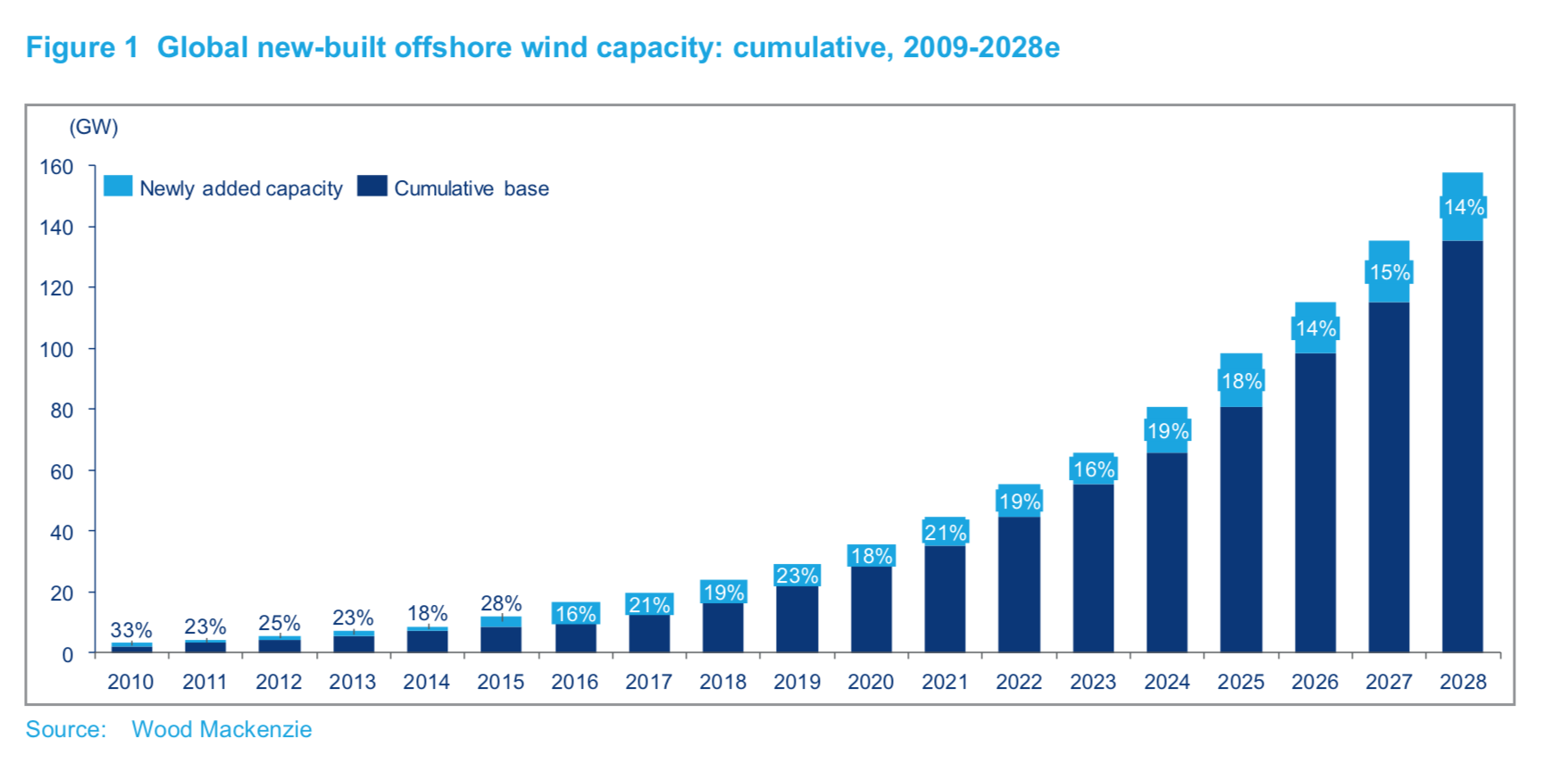
With a diverse 314 GW global offshore wind portfolio to tap in to and cumulative offshore wind capacity expected to increase more than seven-fold by 2028, the industry is set for a strong decade ahead.
According to the figures in the report, offshore wind will constitute 25 percent of total wind demand in 2028 – up from 10 percent in 2019 – and will narrow the gap with offshore upstream oil and gas in terms of capital expenditure deployment.
Foresight 20/20: Onshore & Offshore Wind
Wood Mackenzie's Foresight 20/20 series offers analysis and predictions about the decade ahead. Fill in the form on this page to get our full analysis of onshore and offshore wind trends over the past decade and predictions for the 2020s.

The Onshore Wind Foresight 2020 piece includes:
Defining a decade: A march towards mainstream as costs plummet and expand global adoption
Future focused: A final round of consolidation focuses innovation efforts and squeezes additional economies of scale
Growth gamechanger: Transmission investment is the key to changing the trajectory for onshore wind market growth
Gray swan risk: Repowering running into recycling issues
The Offshore Wind Foresight 2020 piece includes:
Defining a decade: From niche to ‘hard to ignore’
Future focused: Offshore wind is on track to become a mainstream source of electricity
Growth gamechanger: Floating wind can unlock new markets
Gray swan risk: Lack of policy frameworks, lukewarm returns and merchant risk
Smart robotics and automation to improve productivity in offshore wind
Construction to begin on Japan’s first commercial offshore wind project
What are the biggest trends to watch in the global offshore wind market in 2020 and beyond? Rolf Kragelund, Wood Mackenzie director of Global Offshore Wind, sees four key themes:
- Floating wind can unlock new markets
- Lack of policy frameworks
- Lukewarm returns
- Projects will start to pursue merchant routes to market
Kragelund said: “Floating offshore wind is gaining momentum. The evolution of the offshore wind sector will have a positive impact on the floating wind industry.
“The 350 MW+ of floating demonstrators that are set to be deployed by 2022 will strengthen its case. More than 75 floating wind concepts have already been introduced and experienced developers are starting to position themselves more aggressively in the floating industry by forging alliances and building up floating wind pipelines.
“So far, the commercialisation of floating wind has been hampered by a catch-22, where developers argue that capacity is needed to reduce the cost of floating wind, while governments argue that cost declines are needed for governments to allocate capacity to floating wind.
“It’s clear that policy makers need to get onboard and develop a clear route to market if the floating wind industry is to become a true commercial success.
“As most offshore wind growth is expected to be in areas suitable for bottom-fixed offshore wind, floating wind is only expected to constitute a small fraction of the 2019-2028 offshore wind capacity.
“Despite this, up to 10 GW of floating wind could be deployed across ten markets by 2030 new regulatory frameworks are formed.”
Pipelines are piling up across the globe as offshore wind targets expand but thus far regulatory frameworks exist in only nine countries.
“With a lack of commitment from governments, uncertainty remains concerning the pace and scope of the deployment of offshore wind. For offshore wind to go global and become a mainstream source of electricity, more governments need to offer a clear and stable route to market,” added Kragelund.
Lukewarm returns from fierce competition could also curtail industry growth if competing investment opportunities start to become more attractive.
Kragelund said: “Margin squeeze is already a theme in the value chain, particularly following a steep decline in bid prices. Growth and spread of demand, combined with local content policies and larger components, will pile further pressure on the supply chain.
“Furthermore, disperse developments across area characteristics and accelerated increases in turbine ratings will impact capital expenditure distribution.
Developers will be increasingly exposed to fluctuations in wholesale electricity prices as the offshore wind industry transitions to merchant risk markets throughout the 2020s.
“The risk from merchant price exposure will change the way offshore wind projects are financed. Consequently, a better understanding of merchant risk exposure and captured prices for offshore wind is needed to capture the forecasted growth in merchant markets.
“To successfully manage this, companies will need to absorb part of the merchant risk and find new ways to close funding gaps between senior debt and equity in financed projects,” said Kragelund.
Originally published on smart-energy.com
Thứ Sáu, tháng 2 14, 2020
ABB installs world’s first 500 kV digital substation in South America
A substation delivered by ABB will enable Enel Green Power to deliver carbon-free electricity from Brazil’s largest photovoltaic power system safely, reliably and sustainably.
Renewable energy generator Enel Green Power has chosen ABB to install a substation that will deliver solar power from EGP’s solar PV plant at São Gonçalo in Piauí, Brazil, to the country’s 500 kilovolt (kV) transmission network. It is the world’s first digital substation for the 500 kV alternating current rating.
ABB delivered Latin America’s first digital substation in Brazil in 2018. EGP decided to digitalise its assets operations and processes shortly after, having taken note of the ABB installation, the process to be achieved by 2020. The aim is to improve energy efficiency, lower maintenance costs and increase EGP’s deployment of sustainable solutions.
Working closely with EGP, ABB proposed various design and engineering alternatives to find the best and most cost-effective solution meeting the company’s requirements.
When completed, the entire 608 MW plant will be capable of generating more than 1,500 GWh of clean solar power – cutting down 860,000 tons of carbon emissions a year. This will be the biggest solar PV power plant in South America and will strengthen Enel Green Power’s position as a global leader in the green energy sector.
PV power is booming in Brazil. Installed capacity is expected to reach 3,000 MW at the end of this year, up 50 percent from 2018. According to ABSOLAR, the Brazilian PV industry trade association, this equates to $1.3 billion of investment in the country’s economy, translating into 15,000 jobs. Given the situation, today’s grid operators require digital solutions to deal with the increasing amount of intermittent renewable and distributed energy sources being integrated into the grid.
For additional information:
ABB
Enel Green Power (EGP)

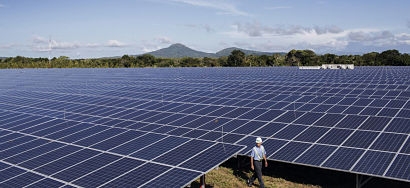
Chiriqui solar power plant, Panama. Courtesy of Enel Green Power
ABB delivered Latin America’s first digital substation in Brazil in 2018. EGP decided to digitalise its assets operations and processes shortly after, having taken note of the ABB installation, the process to be achieved by 2020. The aim is to improve energy efficiency, lower maintenance costs and increase EGP’s deployment of sustainable solutions.
Working closely with EGP, ABB proposed various design and engineering alternatives to find the best and most cost-effective solution meeting the company’s requirements.
When completed, the entire 608 MW plant will be capable of generating more than 1,500 GWh of clean solar power – cutting down 860,000 tons of carbon emissions a year. This will be the biggest solar PV power plant in South America and will strengthen Enel Green Power’s position as a global leader in the green energy sector.
PV power is booming in Brazil. Installed capacity is expected to reach 3,000 MW at the end of this year, up 50 percent from 2018. According to ABSOLAR, the Brazilian PV industry trade association, this equates to $1.3 billion of investment in the country’s economy, translating into 15,000 jobs. Given the situation, today’s grid operators require digital solutions to deal with the increasing amount of intermittent renewable and distributed energy sources being integrated into the grid.
For additional information:
ABB
Enel Green Power (EGP)
Đăng ký:
Bài đăng (Atom)