e

Thứ Bảy, tháng 2 08, 2020

Can Transmission Line Inspection Be Completely Automated?

Two EPRI studies suggest that large-scale automation of transmission system inspection is feasible in the near future.(EPRI = Electric Power Research Institute )
Increasingly, utilities inspect transmission systems by deploying drones to capture high-definition images of conductors, insulators, and other components. In most applications today, humans operate the drones and evaluate the images. By making drone-based inspections cheaper and less time-intensive, automation can drive widespread adoption.
In the first study, EPRI tested several low-cost, commercially available drones at a Georgia field site with energized and non-energized transmission structures. The drones autonomously followed complex, three-dimensional flight plans and captured images without striking the structures. Existing LIDAR data on the structures proved critical to successful flight planning. However, improvements are needed in image perspective and navigation.
In the second study, researchers examined the ability of nine machine learning technologies to evaluate thousands of images and identify defects in structures. Their performance was well above random prediction but well below human analysis. Larger image data sets are needed to train the technologies and improve their effectiveness, and researchers are collecting and curating additional images from utilities.
“To be successful, this research requires collaboration among utilities to pool and curate data and to test machine learning technologies,” said EPRI Senior Technical Leader Dexter Lewis. “Building an effective AI transmission and distribution inspection system is a challenge that is likely too large for any single utility, but together the industry can make a difference.”
EPRI plans to continue examining drone automation on energized transmission structures. EPRI has also established a broad AI initiative to facilitate collaboration among utilities, develop a research roadmap, collect and curate data sets for diverse applications, and educate electric power industry stakeholders.
Key EPRI Technical Experts:
Dexter Lewis

Thứ Sáu, tháng 2 07, 2020

Home Solar Power System Analysis & Update


California's Renewable Energy Problem


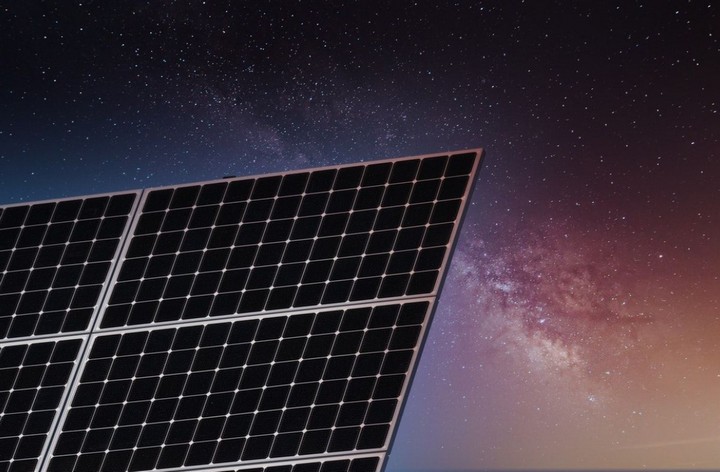
Solar panel for Night


Pin mặt trời vỡ kính vẫn phát điện bình thường


Private Investment in the VN Energy Sector: Status and Trend


                Private Investment in the Viet nam Energy Sector: Status and Trend 

Meeting the electricity requirement for a vibrant economic growth rate involves the compound annual growth rate of the electricity demand, which has been 13% since 2000; this has also resulted in the doubling of electricity consumption every six years. To keep pace with the energy demand, the electricity sector investment will need to accelerate substantially to around $8 billion–$12 billion annually for the period 2016–2030 (World Bank 2018), even if the energy mix further diversifies. Previously, over the period 2011–2015, the Vietnamese electricity sector achieved investments of $7.8 billion per year on average. This is a significant total figure within the constraints of the government budget. Over 80% of this investment has been concentrated in the power generation segment, and almost all of this has funded large coal-fired, gas-fired, and hydro-power projects. According to the government’s Revised Power Development Plan VII, the total investment needs in the power sector for the forecast period 2016–2030 are $152 billion–$185 billion, including one-third of the investment in the energy infrastructure. It is a major challenge to find a sufficient finance supply (World Bank 2018). Table 2 presents the investment growth forecasted over the period 2016–2030 compared with the previous period and based on three scenarios with regard to electricity consumption (low, medium, and high). It can be seen that, in all three scenarios, the annual investment rate growth has increased significantly for network investment. For example, during the period 2016–2020, the investment increased by 11.6% for the lowest electricity demand scenario and will remain the same amount over the period until 2030, requiring the mobilization of a huge amount of money for this sector, at least $152 billion. In terms of electricity generation, except hydro, for which the forecast is uncertain, the expectation is that the electricity sources will attract a large amount of investment. Coalfired electricity generation has an expected growth rate for annual investment of over 7% in 2016–2020, which will decrease gradually to roughly 4% by 2030. The high annual growth rate in the long term makes the total investment in coal power $75 billion–$92 billion; at the same time, the investment in renewables is likely to above 1% during the period 2016–2010 and roughly 2% by 2030. The long-term plan of the government somehow contradicts the emphasis on coal-fired electricity generation in the future, and it may put the country in an energy insecurity situation. ADBI Working Paper 1038 Dang and Taghizadeh-Hesary 6 Table 2: Investment in the Power Sector in Viet Nam’s Historical and Future Forecasted Data Average per Year in Investment Growth (%)

  To achieve the country’s climate change targets, large-scale gas developments of about 20 GW, demand side energy savings of 12 GW, and increased hydropower imports from the Lao People’s Democratic Republic of 5 GW by 2030 are necessary. If those investments are not forthcoming, imported coal will play an even greater role than currently planned. Furthermore, the balance of future investment is shifting slightly from generation toward the network infrastructure, which accounts for about a third of the total investment requirements, to keep pace with the rapid deployment of new energy generation projects, particularly renewables. Figure 4: Total Investment in the Power Sector over the Period 2016–2030 F in Generation and T&D Source: Government of Viet Nam (2016). 


The electricity sector has so far relied primarily on state-guaranteed debt to finance the bulk of its investment program through the national utility–Electricity of Viet Nam (EVN). During the period 2010–2015, EVN financed as much as 96% of its capital expenditure through debt, leading to a total debt amount of $9 billion in 2016. The Ministry of Finance backs part of EVN’s debt de facto, meaning that it is on-lent debt that it had borrowed it ADBI Working Paper 1038 Dang and Taghizadeh-Hesary 7 from a variety of IFIs, and part of the loans that EVN received directly came from a variety of domestic and international commercial banks, which the MOF backed through direct debt guarantees. Both categories of borrowing count toward public debt. In addition to the MOF, domestic commercial and private banks are major financiers of the electricity sector or EVN. Those organizations implemented borrowing typically on a corporate basis rather than a non-recourse project finance basis. Estimations show that five major banks (VCB, CTG, BIDV, TCB, and SHB) channel about 5% of the total outstanding loans to the electricity sector (World Bank 2018). However, this source of financing for the energy sector will be more limited because of the Single Borrower Limit requirement of 15% of the banks’ equity capital, which constrains the lending of many of the banks. Moreover, the sector concentration limits that banks set for prudential purposes further constrain their lending. The traditional model of depending mostly on government borrowing to finance the electricity infrastructure is unsustainable and no longer suitable. At a time when Viet Nam is strategizing substantial electricity investments, the country’s historical method of power sector funding will experience severe constraints for two major reasons. First, Viet Nam’s fiscal status has deteriorated in recent years, and the government is rapidly reaching its secured public debt threshold. With the sizable fiscal deficits in recent years, the public debt rose steeply from 51.7% of the GDP in 2010 to an estimated 63.3% of the GDP (the ceiling is 65% of the GDP) in 2016 and just reduced to 58.4% in 2018. Outstanding publicly guaranteed and on-lent debt to EVN already accounts for 4% of the GDP, and the scope to expand this further over the coming years is extremely limited given the public debt cap. In practice, this means that it will be challenging for the government to back EVN with additional funding or for EVN to borrow from commercial banks or international development finance institutions (IDFIs) with the support of a Ministry of Finance guarantee, as previously. Second, due to its recently gained middleincome status, Viet Nam has reduced access to concessional resources, particularly official development assistance (ODA) loan. As a middle-income country, it has already experienced a dramatic reduction in IDFI financing. The World Bank (2018) suggests that at least 75% of the energy investment requirement needs to come from the private sector until 2030. Currently, the private involvement in the energy sector in Viet Nam is negligible. From 1992 to 2016, Viet Nam attracted $13.8 billion to invest in infrastructure (including energy, transport, and water), of which the energy sector occupies a dominant share with $8.3 billion investment, equivalent to more than 60% of PPI capital. Notable projects in the energy sector include the Phu My 2.2 (gas build-operation-transfer (BOT) power plant, 2002), Nam Con Son gas pipeline (2002), Phu My 3 (gas-powered BOT power plant, 2003), and Mong Duong (coal-fired BOT power plant, 2011). In total, these projects accounted for 6.7 billion PPI, equivalent to 49% of the total PPI in Viet Nam in the period 1992–2016. The four projects mentioned above are in the form of BOT, foreign ownership accounts for the majority, and long-term international commercial debt and benefits from government commitments and guarantees protect the private participants but avoid some political and project-related risks, including converting the dong into US dollars and transferring it abroad. The Nam Con Son gas pipeline is the only project in the field of natural gas transmission and distribution that receives investment from the private sector ($1.3 billion)

Source : WorldBank

Thứ Năm, tháng 2 06, 2020

Pin năng lượng có thể tạo ra điện vào ban đêm mà không cần tới ánh sáng Mặt Trời

Nhờ ứng dụng nguyên lý hoàn toàn ngược lại với các tấm pin năng lượng Mặt Trời, các nhà khoa học đã tạo ra được những tấm pin có khả năng tạo ra năng lượng vào ban đêm.

Một trong những vấn đề với pin Mặt Trời là chúng không thể tạo ra điện vào ban đêm. Thay vào đó, chúng thường chỉ có thể tích điện đã tạo ra trong suốt cả ngày. Tất nhiên cách vận hành này khá hiệu quả nhưng nếu chúng ta có thể tạo ra các tấm pin có thể tạo ra điện vào ban đêm thì sao? Điều đó hoàn toàn có thể và cách nó hoạt động có thể khiến bạn ngạc nhiên.
Đã có cách chế tạo pin năng lượng có thể tạo ra điện vào ban đêm mà không cần tới ánh sáng Mặt Trời - Ảnh 1.

Các nhà nghiên cứu tại Đại học California cho biết, nếu bạn muốn tạo ra một tấm pin hoạt động vào ban đêm, bạn sẽ cần phải tạo ra cơ chế vận hành hoàn toàn ngược so với pin Mặt Trời. Nó có thể coi như một tấm pin chống lại ánh sáng Mặt Trời vậy.
Các tấm pin năng lượng Mặt Trời có nhiệt độ thấp hơn nên nó có khả năng hấp thụ ánh sáng Mặt Trời và biến nó thành điện năng. Trong khi đó, không gian ngoài Trái Đất rất lạnh. Do đó nếu bạn có thể hướng tấm pin về phía nó, tấm pin có thể tỏa nhiệt dưới dạng ánh sáng hồng ngoại. Nếu biết cách nắm bắt nguồn nhiệt đó, chúng ta hoàn toàn có thể tạo ra điện năng.
Theo tuyên bố của nhóm nghiên cứu, những tấm pin này có thể tạo ra được khoảng 1/4 lượng điện vào ban đêm mà một tấm pin Mặt Trời bình thường tạo ra vào ban ngày.
Jeremy Munday, giáo sư khoa Kỹ thuật Điện và Máy tính tại Đại học California đồng thời là tác giả nghiên cứu cho biết, tấm pin Mặt Trời hay pin cản ánh sáng Mặt Trời thực chất chỉ là những "động cơ nhiệt".
Đã có cách chế tạo pin năng lượng có thể tạo ra điện vào ban đêm mà không cần tới ánh sáng Mặt Trời - Ảnh 2.

Munday chia sẻ: "Bạn có năng lượng nhiệt từ Mặt Trời truyền tới Trái Đất và pin năng lượng Mặt Trời sẽ thu lấy năng lượng đó. Vì vậy về cơ bản, bạn cần hai vật thể có nhiệt độ khác nhau và một số cách để chuyển đổi nguồn năng lượng đó. Những gì mà thiết bị này vận hành vào ban đêm cũng tương tự như vậy. Chúng ta cần một cơ thể nóng như Trái Đất và một cơ thể lạnh như không gian vũ trụ. Vì sức nóng lan truyền từ Trái Đất ra ngoài không gian. Do đó chúng ta có thể lấy nguồn nhiệt đó và chuyển đổi nó thành điện năng".
Hệ thống này sử dụng pin bức xạ nhiệt để tạo ra điện, trái ngược với pin quang điện sử dụng trên các tấm pin năng lượng Mặt Trời. Trong đó một tấm pin Mặt Trời thường được làm bằng silicon, vật liệu rất hiệu quả để hấp thụ ánh sáng nằm trong quang phổ có thể nhìn thấy.
Trong khi đó với tấm pin này, nó phải làm từ một vật liệu nào đó giúp thu ánh sáng có bước sóng dài. Hiện tại Munday đang xem xét có nên sử dụng các hợp kim thủy ngân để chế tạo loại pin nhiệt điện này hay không. Nhóm nghiên cứu của Mundy cũng đang phát triển các nguyên mẫu đầu tiên của loại pin hoạt động vào ban đêm.
Đây không phải lần đầu các nhà khoa học nghĩ về một tấm pin có thể hoạt động ngay cả vào ban đêm.
Đã có cách chế tạo pin năng lượng có thể tạo ra điện vào ban đêm mà không cần tới ánh sáng Mặt Trời - Ảnh 3.

Hồi tháng 11, các nhà khoa học tại Đại học Stanford đã đăng tải một nghiên cứu trên tạp chí Jouele về một loại pin nhiệt điện có thể bức xạ nhiệt ra ngoài không gian để tạo ra điện.
Không giống các loại pin nhiệt điện truyền thống khác, thiết bị của các nhà khoa học kết hợp mặt lạnh của mô-đun nhiệt điện với bề mặt hướng lên trời. Thiết bị sẽ bức xạ nhiệt độ vào không gian lạnh lẽo và lấy nhiệt lượng từ không khí xung quanh, từ đó tạo ra điện năng.
Hệ thống pin năng lượng Mặt Trời đã có những cải tiến mạnh mẽ trong nhiều năm qua để đáp ứng nhu cầu năng lượng. Tuy nhiên nếu chúng ta có thể tạo ra một hệ thống sản xuất năng lượng sạch liên tục 24 giờ/ngày, chúng ta có thể tạo ra đươc nhiều điện năng hơn, đồng thời lưu trữ cho nhiều mục đích khác nhau, đề phòng trường hợp khẩn cấp cần dùng tới.
Nghiên cứu đã được đăng tải trên tạp chí ACS Photonics mới đây.
Tham khảo Inverse-Genk