e

Thứ Tư, tháng 11 06, 2019

An Approach for Evaluating Non-Wires Alternatives

Electric transmission towers and overhead power lines

An Approach for Evaluating Non-Wires Alternatives

Non-Wires Alternatives are an approach to grid upgrades that are not centered around installing or upgrading existing wire infrastructure.
Before we dive into describing an approach for assessing non-wires alternatives (NWAs), let’s start with a description of what they are, instead of what they are not.
NWAs are an approach to grid upgrades that are not centered around installing or upgrading existing wire infrastructure.
But what does that mean?
The IEEE PES Grid Vision 2050 report discusses the transition from today’s load-following paradigm, where we dispatch generation to balance load, to a future state where there exists a supply-following paradigm. Under this scenario, load (the sum total of power demand) is used to match up with available generation. This report also introduced a starkly simple model of the grid:
  • Make
  • Move
  • Use
Simply put, these are the tools we have for managing the grid. We can make electricity. We can move electricity. And we can use electricity.
Flowchart of the power grid
A conventional solution to grid upgrades involves avoiding, or at least minimizing, any constraints for moving power. In other words, adequate capacity must be built and maintained within all the equipment in the chain from generation to distribution feeder circuits.
We use lines to move power, so can we take the position that a non-wires solution needs to involve making and using electricity? Can it be that simple? If so, what types of solutions can we employ to do that and what types of problems can they help solve?
If we make electricity, it has to go somewhere, so it needs to move where it can be used. If we eliminate the movement of power from the paradigm, the generation and loads need to be relatively close to each other. In other words, we are looking at local electricity markets and other ways of having electricity sinks and sources. This means we’re looking at storage.
Movement of power coordination
We have traditionally designed grids for peak use, so if we need new lines, how can markets help?
There are many potential benefits that deserve discussion, but perhaps highest on that list are the important benefits that can be realized through local dynamic balancing. That benefit is flexibility.
The impacts of today’s wave of electrification are difficult to predict over the long term. The prospect of electrification of even 40% of our transportation fleet creates many scenarios for grid capacity planning, notwithstanding all the other elements of electrification, including two-way power flows. So, if we select a conventional “putting-steel-in-the-ground” approach, do we want to risk being back in the same position within a few years, trying to right-size infrastructure assets?
Under the traditional, conventional approach, it will be inevitable that the model will become “go big or go home.”
But how can we justify the sizing and why make incremental increases when NWAs could handle the increased load?
If the edge of the grid is going to continue to evolve, then utilities must be able to react and respond. That sounds a lot like flexibility needs to be the prime consideration. But before we jump the gun, we need to go back and explore some of the challenges facing utilities today. We need an approach for determining if NWAs are a potential solution to be evaluated, and if so, how they stack up against conventional solutions.
And that brings up an interesting point: should we be calling these NWAs or non-wires solutions? Both are terms that are being used extensively. Ultimately, the solution is what you choose to implement — but before you can choose a solution you need an approach for examining alternatives and that is what we will address in subsequent articles
Source:wwwTdworld/smartgrid
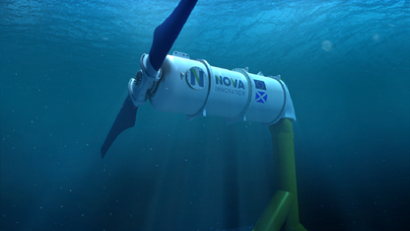
Nova Innovation launches funding round to fast-track tidal energy technology

Nova Innovation launches funding round to fast-track tidal energy technology

0
Nova Innovation is seeking to crowdfund £500,000 on investment platform Seedrs, to fast-track tidal energy technology and accelerate growth across Europe and North America.
Nova Innovation launches funding round to fast-track tidal energy technology
Courtesy of Nova Innovation
The company designs, builds and operates tidal turbines that generate renewable energy from the sea and in 2016 installed the world’s first offshore tidal array located in the Shetland Islands, Scotland. The turbines have been generating clean electricity and exporting to the grid for over three years.
In 2018, Nova worked with Tesla to add energy storage to their tidal technology, creating the world’s first tidal power station with the ability to deliver baseload (constant, steady-state) power and provide energy on demand to meet consumer needs.
“With the climate emergency and a global hunger for clean, sustainable energy, the time is right to invest in additional sources of renewable energy” said Simon Forrest, CEO of Nova Innovation. “Nova’s tidal technology can generate clean, predictable electricity from the abundant tidal resources around the world. As well as harnessing a great source of renewable energy, Nova’s tidal technology offers the ability to deliver baseload power to the grid, giving it the opportunity to displace coal, diesel and nuclear – something solar and wind are unable to do. We are offering the opportunity for people to invest in Nova and join our mission to harness energy from the tide, securing this source of clean electricity for the future. The investment will drive our three-year plan to lower the cost of tidal energy, accelerate growth and move into new international markets. Not only are we delivering clean energy, we are creating a clean tech industry with a truly global mission.”

The challenge for established renewables has been their unpredictable and intermittent nature – the sun doesn’t always shine; the wind doesn’t always blow. Tidal energy is completely predictable – minutes, days, even years in advance. Combined with energy storage, the tide can deliver a valuable source of predictable energy on demand. The development of tidal energy technologies will not only bring environmental benefits, it will create jobs and build a marine energy sector that plays to the strength of maritime nations. UK Catapult has estimated that the tidal industry could bring a net benefit to the UK of £1.4 billion by 2030, supporting almost 14,500 jobs in the UK by 2040, boosting local economies and coastal communities
Source:https://www.renewableenergymagazine.com

Thứ Ba, tháng 11 05, 2019

Chủ Nhật, tháng 11 03, 2019

IIl Volo "Grand Amore "


Thứ Tư, tháng 10 30, 2019

Why Does the Bioeconomy Matter for Utilities?

bioregio.PNG

Why Does the Bioeconomy Matter for Utilities?

Bioeconomy or biobased economy, as well as circular economy, provide sustainable solutions for the future.
Climate change, population growth and the need for resources have become an increasing concern all over the world. At the same time, bioeconomy or biobased economy, as well as circular economy, provide sustainable solutions for the future. The utilisation of renewable biomass will reduce our dependence on fossil resources and prevent biodiversity loss, and at the same time, create economic growth and jobs.
The ‘bioeconomy’ relies on renewable natural resources (e.g., plants, crops and animals) to produce food, feed, products, materials, energy and services. The bioeconomy includes a wide range of sectors: traditional ones, for example, include agriculture, forestry, fisheries, pulp and paper production. Also, novel bioeconomy sectors, such as the chemical, biotechnology and energy industries, contribute increasingly to overall bioeconomic production.
Circularity in bio-based systems
When discussing the concept of bioeconomy in a wider perspective, also circular economy enters the scene. The circular economy means an economic system where waste is minimized and resources are used effectively. The circular economy includes reuse, sharing, repair, refurbishment, remanufacturing, and recycling to create closed systems.
When combining bioeconomy and circular economy, the most is gotten out of these two brilliant concepts. A circular and more bio-based economy provides innovative solutions for enabling sustainable way of living. To support a sustainable future, the links between the bioeconomy and circular economy should be twinned together. In this, the role of close cooperation between the business sector, and research and innovation for developing sustainable bioeconomy solutions, is in a key position.
A central concept in bio-based circular economy is also the use of leftovers or residuals as raw material. This is called as industrial symbiosis, an industrial ecosystem where unused resources or leftovers of one company are utilised by another. This results in mutual economic, social and environmental benefits.
To develop a successful and sustainable bioeconomy, a strategic cross-sectoral approach is necessary. However, due to the concept's wide scope and differing international approaches, to fully understand and utilize the bioeconomy is challenging.
Examples of bio-based circular economy
In order to share the knowledge and success stories of bio-based circular economy, the BIOREGIO project ‘Regional circular economy models and best available technologies for biological streams’ (2017-2021) has gathered examples from different corners of Europe. In this project, funded by the Interreg Europe program, good practices of technologies and cooperation models are transferred between six European regions. Based on the knowledge exchange, all regions develop their strategies in supporting the bio-based circular economy even more in the future. Some outstanding examples of good practices are presented below.
Decentralized power from organic materials
In Thessaloniki, Greece, a small-scale bio-based power generator for converting organic residues into electric power and heat has been developed. BIO2CHP combines two well-known technologies, gasification and gas engines. An automated control system operates the energy production and produces energy at a price three-four times lower than the grid currently available in Greece. Several materials have been tested for operation in real-life conditions: grape pomace, peach kernels, olive kernels and almond shells. The system is built inside a container and operates at a standalone mode.
Xylitol from oat mill side streams
A recent innovation from the Päijät-Häme region in Finland comprises of xylitol production from oat hulls. The food company Fazer has initiated a production line utilising the side streams of its own oat mill. Until now, the hulls have been used in energy production or as feed for animals. However, oat hulls contain xylose that can be used to manufacture xylitol. Through this new process resource utilisation is maximized when all parts of oat are used. Right now, the new xylitol manufacture plant is being built next to the oat mill, in order to minimise the need for transport. The xylitol production will begin in 2020.
Bio-herbicide to benefit the environment
In Spain, Castilla-La Mancha, a bio-herbicide from lignocellulosic waste, wood vinegar, has been developed to replace the glyphosate. Glyphosate is chemical pesticide, which has been forbidden in some countries and, for example, some municipalities have limited its use in public parks due to serious effects on human health and environment. Currently, a good chemical substitute does not exist.
Wood vinegar is obtained through condensation of gases produced in thermal treatment of lignocellulosic waste. It consists mainly of water and organic compounds were acetic acid is the major component. The product is innovative because of its benefits to the environment and safety for human health.
Strong potential of new emerging sectors
Supporting sustainability is one of the key issues in developing the future bioeconomy. To be successful, the bioeconomy has to be sustainable and based on circular economy principles. Currently, traditional bioeconomy sectors like food, wood, fish and waters as well as fuel and energy are best known and considered more relevant than other bioeconomy industries. At the same time, there is an increasing potential for new sectors, such as textiles and pharmaceuticals. The opportunities of these bioeconomy sectors should be taken seriously, by both business and decision-makers.
Education, research and innovation play key roles when transformative and sustainable improvements are developed. To comprehensively support the bioeconomy and release its full potential, different sectors and actors need new dynamics and ability to see the connections.
Source : www.tdworld.com
References
Interreg Europe 2019a. Regional circular economy models and best available technologies for biological streams. https://www.interregeurope.eu/bioregio/
Interreg Europe 2019b. Good practice: Xylitol from oat mill sidestreams. https://www.interregeurope.eu/policylearning/good-practices/item/2523/xylitol-from-oat-mill-sidestreams/
Interreg Europe 2019c. Good practice: Use of organic residues for energy production. https://www.interregeurope.eu/policylearning/good-practices/item/1336/use-of-organic-residues-for-energy-production/
Interreg Europe 2019d. Good practice: Wood vinegar as a natural bio-herbicide. https://www.interregeurope.eu/policylearning/good-practices/item/2419/wood-vinegar-as-a-natural-bio-herbicide/
McCormick, K. & Kautto, N. 2013. “The bioeconomy in Europe: An overview’, Sustainability, 5, 2589-2608; doi:10.3390/su5062589
Vanhamaki, S., Schneider. G. & Manskinen, K. 2019. Perspectives on Sustainable Bioeconomy in the Baltic Sea Region. International Journal of Economics and Management Engineering, 13:4. https://waset.org/publications/10010282/perspectives-on-sustainable-bioeconomy-in-the-baltic-sea-region
Vanhamäki, S., Medkova, K., Malamakis, A., Marisova, E., Huisman, D, Moussiopoulos, N. 2019.: Bio-based Circular Economy in European National and Regional Strategies. International Journal of Sustainable Development and Planning, 14:1, 31–43. https://doi.org/10.2495/SDP-V14-N1-31-43

Thứ Bảy, tháng 10 26, 2019

The Sound of MUSIC


VÌ SAO NĂNG LƯỢNG MẶT TRỜI LÀ SẠCH NHƯNG PIN MẶT TRỜI LẠI RẤT ĐỘC HẠI?

Những năm gần đây, điện năng lượng mặt trời tạo được sức hút lớn và có những bước phát triển mạnh mẽ. Tuy nhiên, trong 2 đến 3 thập kỷ nữa, khi những tấm pin năng lượng mặt trời hết hạn thì vấn đề môi trường lại đặt ra một dấu hỏi lớn.
Pin năng lượng mặt trời không 'sạch' như nhiều người nghĩ
Điện năng thu được từ mặt trời đúng là năng lượng 'sạch' nhưng những tấm pin mặt trời thì lại không sạch như nhiều người nghĩ. Theo các nhà khoa học, việc sản xuất các tấm pin năng lượng mặt trời làm tăng đáng kể khí thải nitơ trifluoride (NF3), độc hại gấp 17.200 lần so với carbon dioxide (CO2) nếu tính theo chu kỳ 100 năm. Khí thải NF3 đã tăng tới 1.057% trong vòng 25 năm qua. Trong quãng thời gian đó, lượng khí thải CO2 chỉ tăng khoảng 5% ở Mỹ.
Ở một vấn đề khác, cơ quan năng lượng tái tạo quốc tế (IRENA) cho biết các tấm pin năng lượng mặt trời thường có tuổi thọ từ 20 - 30 năm, mất dần năng suất theo thời gian và rất khó tiêu hủy. IRENA cũng ước tính cuối năm 2016 thế giới có 250.000 tấn pin năng lượng mặt trời hết hạn và trở thành rác thải. Dự kiến đến năm 2050 số rác thải từ loại vật liệu này sẽ đạt đến con số 78 triệu tấn. Cần phải biết rằng, các tấm pin năng lượng mặt trời có chứa chì, cadmium và một số chất độc hại khác có thể gây ung thư.
Quá trình xử lý các tấm pin năng lượng mặt trời hết hạn sử dụng là không thể đốt bởi sẽ gây ra những hậu quả nghiêm trọng. Tại một số quốc gia đang phát triển, người ta thường đốt chúng để lấy phần dây đồng rồi bán lại. Quá trình này sẽ phải đốt cháy nhựa, gây ra khói chứa chất độc hại sẽ khiến có người có khả năng bị ung thư hoặc dị tật bẩm sinh khi hít phải.
Vào tháng 11/2016, Bộ Môi trường Nhật Bản đã đưa ra cảnh báo rằng lượng chất thải từ các tấm pin năng lượng mặt trời mà nước này sản sinh ra mỗi năm có khả năng tăng từ 10.000 đến 800.000 tấn vào năm 2040. Cơ quan này cũng cho biết Nhật Bản không có kế hoạch xử lý an toàn với lượng rác thải sinh ra này. Một báo cáo khác cũng đến từ Nhật Bản cho biết đến 2034, sản lượng chất thải từ pin mặt trời sẽ lớn hơn gấp khoảng 70 - 80 lần so với năm 2020.
Trung Quốc hiện tại đang là đất nước có nhiều nhà máy năng lượng mặt trời nhất thế giới. Thậm chí, số tấm pin mặt trời ở nước này cũng gấp đôi của Hoa Kỳ. Tuy nhiên, các chuyên gia cho rằng Trung Quốc không có kế hoạch xử lý lượng rác thải mà các tấm pin cũ hết hạn sản sinh ra trong 20 - 30 năm nữa. Các số liệu thống kê chỉ ra vào năm 2050, quốc gia đông dân nhất thế giới có thể sẽ có tới 20 triệu tấn chất thải từ pin mặt trời - gấp 2.000 lần trọng lượng tháp Eiffel.
Thậm chí việc pin mặt trời biến thành rác thải cũng không cần phải đợi đến khi chúng hết hạn mà có thể đến ngay từ yếu tố thời tiết. Vào năm 2015, một cơn lốc xoáy đã phá hủy 200.000 mô-đun năng lượng mặt trời tại công ty năng lượng mặt trời ở California. Không lâu sau đó, một cơn bão lớn đã khiến trang trại điện mặt trời rất lớn - nơi tạo ra 40% điện năng cho Puerto Rico bị hư hại nghiêm trọng.
Một số nhà khoa học còn cho rằng, rác thải của pin năng lượng mặt trời khi hết hạn còn khó xử lý hơn rác thải của điện hạt nhân. Họ đặt giả thuyết trong 25 năm tới điện mặt trời sản xuất ra lượng điện năng bằng với điện hạt nhân của năm 2016. Khi đó, nếu xếp lượng rác thải sinh ra vào một sân bóng đá thì rác thải của năng lượng mặt trời sẽ cao tới khoảng 16.000 mét (gấp đôi chiều cao của đỉnh Everest) trong khi rác thải của điện hạt nhân chỉ cao khoảng 53 mét.
Rất khó xử lý chất thải từ pin năng lượng mặt trời
Một báo cáo khoa học chỉ ra rằng các tấm pin năng lượng mặt trời có sử dụng kim loại nặng như chì, crom (chromium) hay cadimi (Cadmium) rất độc hại cho con người và môi trường. Những rủi ro từ chất thải hạt nhân là không thể bàn cãi nhưng có thể chuẩn bị trước để ứng phó còn rủi ro từ chất thải năng lượng mặt trời thì đến nay gần như vẫn chưa có phương pháp nào thực sự thiết thực. Đồng thời, các chất có hại trong tấm pin năng lượng mặt trời có thể tồn tại trong môi trường trong khoảng thời gian rất dài, việc lưu trữ chúng trong các bãi rác sẽ gây ô nhiễm cho toàn bộ khu vực.
Cùng với đó, quá trình sản xuất các tấm pin năng lượng mặt trời thường sử dụng một số chất liệu nguy hiểm như axit sunphua và khí phosphine độc hại. Điều này khiến việc tái chế chúng là rất khó khăn. Và kể cả khi tái chế được thì chi phí bỏ ra cũng thường cao hơn giá trị kinh tế mà chúng mang lại. Thậm chí gần đây có tin đồn rằng một số nước phát triển đang bán lại các tấm pin mặt trời đã qua sử dụng với giá rẻ cho các nước đang phát triển dù rằng năng suất thu được điện năng của chúng là khá thấp.
Trả lời báo Phapluatnet trong thời gian gần đây, ông Phan Trọng Khang, Quản lý các dự án điện mặt trời tại Công ty Cổ phần Tư vấn Xây dựng điện 1 (EVN), cho biết: 'Khi chúng ta không dùng pin mặt trời nữa thì buộc phải chôn xuống đất. Khu vực chôn chắc chắn sẽ không trồng trọt cây trái được, "phải mất thêm phần diện tích đất cho xử lý việc này'.
Tuy nhiên, các nhà khoa học trên thế giới lại khuyến cáo rằng việc chôn các tấm pin mặt trời có thể khiến các chất độc hại ngấm vào đất, gây ra vấn đề nghiêm trọng với nguồn nước uống.
Việt Nam mới phát triển điện năng lượng mặt trời nhưng một số nước phát triển đã sử dụng công nghệ này từ lâu và hiện đang đau đầu với bài toán rác thải từ chúng. Tái chế gần như là cách hiệu quả nhất nhưng lại vấp phải vấn đề từ chi phí. Hiện tại Mỹ có bang Washington là nơi duy nhất yêu cầu nhà sản xuất pin mặt trời phải có quy trình cho việc tái chế. Tuy nhiên, chính quyền bang lại không phân bổ tài chính cho việc này khiến các nhà sản xuất gặp khó khăn.
TheoVNreview.vn