e

Hiển thị các bài đăng có nhãn New technology. Hiển thị tất cả bài đăng

Thứ Sáu, tháng 7 09, 2021

Bình minh của ngành công nghiệp hydrogen đã ló dạng

 Bình minh của ngành công nghiệp hydrogen đã ló dạng

Một công bố mới đây do đại học Monash University hợp tác với viện Geoscience Australia cho hay, mục tiêu của chính phủ Australia đối với việc sản xuất hydrogen đạt mức giá thấp hơn 02 đô la Úc (1.5 đô Mỹ) sẽ về đích sớm hơn dự kiến.
Tốc độ của việc đạt được mục tiêu này phụ thuộc vào nhiều yếu tố, bao gồm việc ứng dụng công nghệ đang gia tăng nhanh chóng, giá thành sản xuất giảm, việc cải thiện hạ tầng hỗ trợ cho việc cung cấp và vận chuyển hydrogen.
Theo mô hình tính toán này, việc tận dụng “off grid” từ nguồn năng lượng mặt trời và năng lượng gió sẽ giúp tối ưu hoá chi phí; cộng thêm các chi phí có liên quan đến nước và điện phân thì giá thành chừng 03 đô Úc (2.2 đô Mỹ) cho một kg hydrogen.
Đặng Ngữ dẫn nguồn từ tạp chí H2 View
Có thể là hình ảnh về văn bản cho biết 'Hydrogeni ready Drive economic growth and build a carbon neutral economy? Hydrogen can do both. meet the aspirations Americans Renewables problem hard-t marine nydrogen ndustries forward. next years, TODAY Hydrogen benefitting moving people benefit. economy energy solutions. nvestments costs. billion hydrogan pard solutions scale. hydrogen revenue growth across hydrogen Estimated Growth: revenue Between 2030 2050, affordable hydrogen scale across many sectors.o 2050 about heavy fuel shipping fuel aviation globally. Estimated Growth: revenue Continued nvestment hydrogen additional job hamful.N emissions 36% 30% Hydrogen can do more for tomorrow only your support today. catalyzing FCHEA'
43

Thứ Năm, tháng 7 08, 2021

Hydrogen energy works


Từ mô hình lý thuyết đến hiện thực hoá bằng các ứng dụng thương mại thực tế mất bao lâu? Với gia tốc công nghệ như hiện nay, có lẽ, khoảng thời gian đó đâu chừng 02 năm đối với các quốc gia cường quốc công nghệ. Nếu không được khuyến khích bằng các chính sách hỗ trợ cụ thể từ các chính phủ, sự góp sức từ các định chế tài chính thì khoảng thời gian này sẽ kéo dài lâu hơn. Có thể là 05 năm hoặc 10 năm.

Wind plant Hydrogen production
Solar plant Hydrogen production


Thứ Hai, tháng 5 31, 2021

Xu hướng Kỹ thuật số Công nghiệp 4.0 đang phát triển

 Công nghệ công nghiệp 4.0 đang tạo ra sự thay đổi nhanh chóng trong ngành điện toàn cầu. Với sự gia tăng của IoT, máy bay không người lái và kỹ thuật số hóa, dường như mỗi ngày đều có những thay đổi đối với lĩnh vực năng lượng, nhưng công cụ nào trong số những công cụ này sẽ mang lại cho các tổ chức thành công lớn nhất? Cân nhắc giữa chi phí áp dụng và lợi nhuận sẽ là yếu tố quyết định để tiến lên phía trước.

Shogo Yabe, Giám đốc Phát triển Kinh doanh của Sumitomo SHI FW, điều này để nói về những tiến bộ kỹ thuật số mà anh ấy sẽ làm nổi bật, mà anh ấy tin rằng có thể có tác động đáng kể nhất đến việc tối ưu hóa hiệu suất. “Nhiều AI hoặc công nghệ kỹ thuật số đã [đã] được phát triển để tìm và phát hiện tình huống bất thường hoặc tìm các giá trị bất thường thông qua DCS hoặc trực tiếp thông qua cảm biến hoặc [một] thiết bị [đã] được trang bị [cho] thiết bị hoặc nhà máy.” Thông qua công nghệ, hiệu suất phát hiện đã được phát triển. Tuy nhiên, Yabe cho biết vẫn còn khó khăn để đánh giá một cách thích hợp giá trị bất thường được phát hiện từ mức quan trọng và hành động phù hợp để giảm nhiễu loạn năng lượng. Hiện tại, vẫn cần đến sự phán đoán của con người để hành động phù hợp. “Công nghệ kỹ thuật số không phải là toàn năng,

Gan Boon Hean, Giám đốc điều hành của Leader Energy, đã chia sẻ về những bước tiến thú vị về kỹ thuật số đang phát triển. Ông cho biết với việc sử dụng thông tin SCADA và điều khiển nhà máy điện kết hợp với hình ảnh nhiệt bằng máy bay không người lái và việc bổ sung phần mềm phân tích dữ liệu; kỹ sư O&M có thể xác định hiệu quả các khu vực tiềm ẩn điểm yếu cần được chú ý thêm. Ông nói: “Điều này sẽ cải thiện độ tin cậy của nguồn cung cấp điện, giảm chi phí vận hành và bảo dưỡng và cuối cùng hy vọng sẽ làm giảm chi phí điện năng nói chung. Các Nhà máy Điện mặt trời đã áp dụng các phương pháp này, có thể là một yếu tố thay đổi cuộc chơi. Gan nói: “Điều này đã từ từ và chắc chắn được đưa vào các nhà máy nhiệt điện thông thường, vì hầu hết các thiết bị mới hơn đều có sẵn dữ liệu I / O.

Trong khi các nhà máy năng lượng nhỏ có thể có cơ hội để áp dụng những tiến bộ đã nêu ở trên một cách nhanh chóng, thì làm thế nào các công ty tiện ích có thể tập trung tốt nhất vào những tiến bộ đúng đắn của tổ chức họ? Trong một  thông cáo báo chí của Bidgely  được công bố trên businesswire.com, các công ty tiện ích nên bắt đầu khai thác dữ liệu của họ để họ có thể thoát khỏi cách quản lý khách hàng cũ và “… thay vào đó tận dụng dữ liệu làm động lực cho các quyết định kinh doanh. Như Abhay Gupta, Giám đốc điều hành của Bidgely, nhận xét, 'có một số tiện ích còn tiên tiến hơn nhiều. Họ đang lấy dữ liệu của mình và đầu tư vào nền tảng phân tích. Họ đang đầu tư vào các cảnh báo được cá nhân hóa cho khách hàng. Họ đang cung cấp cho khách hàng những thứ phù hợp với họ. '”

Những đề xuất kiểu này dường như không lọt tai người điếc, như một ví dụ về một công ty tiện ích có thể được chứng minh trong một  thông cáo báo chí trên trang web của IBM Cơ quan Phát điện Thái Lan (EGAT) đã thông báo sẽ hợp tác với các giải pháp AI của IBM để hỗ trợ quản lý các tài sản có giá trị cao trong các nhà máy điện của họ. Nophol Phun-Ngun, Giám đốc Bộ phận Quản lý Tài sản Nhà máy Điện, EGAT, cho biết về khả năng hợp tác, “Việc tận dụng Hệ thống Quản lý Tài sản Doanh nghiệp của IBM đã cho chúng tôi khả năng hiển thị hiệu suất của các tài sản và hoạt động quan trọng của mình, giúp chúng tôi quản lý chúng một cách hiệu quả. 

Nhìn chung, các tiện ích và IPP trong toàn khu vực đã được đo lường trong cách tiếp cận của họ đối với các giải pháp kỹ thuật số và vẫn chưa hoàn toàn nắm bắt được các công nghệ thúc đẩy cuộc Cách mạng Công nghiệp lần thứ tư, khi so sánh với các công nghệ khác ở Châu Âu hoặc Bắc Mỹ. Nhưng như EGAT cho thấy trong việc áp dụng các giải pháp AI, các công ty lớn trong khu vực đang thực hiện các bước để nắm lấy những công nghệ mang tính cách mạng này và thúc đẩy tối ưu hóa tài sản của họ. Như đã trình bày ở trên, không có một cách thức phù hợp nào được quy định để cải thiện hiệu suất của một nhà máy điện, các công cụ rất phong phú và việc lựa chọn một cách khôn ngoan sẽ rất quan trọng để áp dụng hiệu quả nhất

Source : https://www.enlit-asia.com/generation/digitalisation-generation/industry-4-0-digital-trends-rising/

Thứ Tư, tháng 10 07, 2020

Nhửng mẫu xe điện kiều mới


Về mặt hiệu suất, xe điện đắt hơn so với các loại xe động cơ đốt trong. Giờ đây, hệ thống lắp ráp theo khối module có thể giúp sản xuất những chiếc xe điện này với chi phí thấp hơn nhiều.

TheoVTV2


Thứ Năm, tháng 6 18, 2020

Công nghệ chăng dây điện bằng máy bay


Chủ Nhật, tháng 2 09, 2020

UK-German alliance in solar digital drone inspections


UK-German alliance in solar digital drone inspections

UK aerial inspection and data analytics company Above has acquired German drone start-up Ucair.
The buy means Above (formerly Above Surveying) has broken into the German market and it says it will also strengthen its presence in other European countries.
Above has been a pioneer of combining drone-based inspections of solar plant with cutting-edge data solutions.
“Digitalisation and automation of solar inspections will play a fundamental role in the increasing deployment of utility scale-solar” said Will Hitchcock, founder and chief executive of Above.
He said that “it is now well established that thermography provided by drones is the most efficient way of analysing the health of large-scale solar assets”.
He added that Ucair and Above “have been anticipating the digital transformation needed in the solar industry and have both invested heavily into the automation of their analysis process – but more importantly – into digitalisation and data mining”.
“Above is strongly positioned to scale its reach across the globe and accelerate its ambition to be the leading aerial inspection and data analytics company thanks to its advances in
the automation of aerial inspections,” he said. “Together we will draw on our market knowledge to strengthen our service offering and software capabilities.”
Above and Ucair have already collaborated over the past two years in a bid to improve best practices in the sector and ucair chief executive Viola Hoffmann said “this has made the union of the two companies a logical next step”.

Thứ Tư, tháng 1 08, 2020

Máy thủy điện bỏ túi nhỏ như cái đĩa


(ĐTCK) Blue Freedom Portable là một chiếc máy phát điện bỏ túi, nó hoạt động chẳng khác gì một nhà máy thủy điện, dùng sức nước để tạo năng lượng mà lại nhỏ xíu để mang theo dễ dàng trong những chuyến đi.

Thứ Tư, tháng 10 30, 2019

Why Does the Bioeconomy Matter for Utilities?

bioregio.PNG

Why Does the Bioeconomy Matter for Utilities?

Bioeconomy or biobased economy, as well as circular economy, provide sustainable solutions for the future.
Climate change, population growth and the need for resources have become an increasing concern all over the world. At the same time, bioeconomy or biobased economy, as well as circular economy, provide sustainable solutions for the future. The utilisation of renewable biomass will reduce our dependence on fossil resources and prevent biodiversity loss, and at the same time, create economic growth and jobs.
The ‘bioeconomy’ relies on renewable natural resources (e.g., plants, crops and animals) to produce food, feed, products, materials, energy and services. The bioeconomy includes a wide range of sectors: traditional ones, for example, include agriculture, forestry, fisheries, pulp and paper production. Also, novel bioeconomy sectors, such as the chemical, biotechnology and energy industries, contribute increasingly to overall bioeconomic production.
Circularity in bio-based systems
When discussing the concept of bioeconomy in a wider perspective, also circular economy enters the scene. The circular economy means an economic system where waste is minimized and resources are used effectively. The circular economy includes reuse, sharing, repair, refurbishment, remanufacturing, and recycling to create closed systems.
When combining bioeconomy and circular economy, the most is gotten out of these two brilliant concepts. A circular and more bio-based economy provides innovative solutions for enabling sustainable way of living. To support a sustainable future, the links between the bioeconomy and circular economy should be twinned together. In this, the role of close cooperation between the business sector, and research and innovation for developing sustainable bioeconomy solutions, is in a key position.
A central concept in bio-based circular economy is also the use of leftovers or residuals as raw material. This is called as industrial symbiosis, an industrial ecosystem where unused resources or leftovers of one company are utilised by another. This results in mutual economic, social and environmental benefits.
To develop a successful and sustainable bioeconomy, a strategic cross-sectoral approach is necessary. However, due to the concept's wide scope and differing international approaches, to fully understand and utilize the bioeconomy is challenging.
Examples of bio-based circular economy
In order to share the knowledge and success stories of bio-based circular economy, the BIOREGIO project ‘Regional circular economy models and best available technologies for biological streams’ (2017-2021) has gathered examples from different corners of Europe. In this project, funded by the Interreg Europe program, good practices of technologies and cooperation models are transferred between six European regions. Based on the knowledge exchange, all regions develop their strategies in supporting the bio-based circular economy even more in the future. Some outstanding examples of good practices are presented below.
Decentralized power from organic materials
In Thessaloniki, Greece, a small-scale bio-based power generator for converting organic residues into electric power and heat has been developed. BIO2CHP combines two well-known technologies, gasification and gas engines. An automated control system operates the energy production and produces energy at a price three-four times lower than the grid currently available in Greece. Several materials have been tested for operation in real-life conditions: grape pomace, peach kernels, olive kernels and almond shells. The system is built inside a container and operates at a standalone mode.
Xylitol from oat mill side streams
A recent innovation from the Päijät-Häme region in Finland comprises of xylitol production from oat hulls. The food company Fazer has initiated a production line utilising the side streams of its own oat mill. Until now, the hulls have been used in energy production or as feed for animals. However, oat hulls contain xylose that can be used to manufacture xylitol. Through this new process resource utilisation is maximized when all parts of oat are used. Right now, the new xylitol manufacture plant is being built next to the oat mill, in order to minimise the need for transport. The xylitol production will begin in 2020.
Bio-herbicide to benefit the environment
In Spain, Castilla-La Mancha, a bio-herbicide from lignocellulosic waste, wood vinegar, has been developed to replace the glyphosate. Glyphosate is chemical pesticide, which has been forbidden in some countries and, for example, some municipalities have limited its use in public parks due to serious effects on human health and environment. Currently, a good chemical substitute does not exist.
Wood vinegar is obtained through condensation of gases produced in thermal treatment of lignocellulosic waste. It consists mainly of water and organic compounds were acetic acid is the major component. The product is innovative because of its benefits to the environment and safety for human health.
Strong potential of new emerging sectors
Supporting sustainability is one of the key issues in developing the future bioeconomy. To be successful, the bioeconomy has to be sustainable and based on circular economy principles. Currently, traditional bioeconomy sectors like food, wood, fish and waters as well as fuel and energy are best known and considered more relevant than other bioeconomy industries. At the same time, there is an increasing potential for new sectors, such as textiles and pharmaceuticals. The opportunities of these bioeconomy sectors should be taken seriously, by both business and decision-makers.
Education, research and innovation play key roles when transformative and sustainable improvements are developed. To comprehensively support the bioeconomy and release its full potential, different sectors and actors need new dynamics and ability to see the connections.
Source : www.tdworld.com
References
Interreg Europe 2019a. Regional circular economy models and best available technologies for biological streams. https://www.interregeurope.eu/bioregio/
Interreg Europe 2019b. Good practice: Xylitol from oat mill sidestreams. https://www.interregeurope.eu/policylearning/good-practices/item/2523/xylitol-from-oat-mill-sidestreams/
Interreg Europe 2019c. Good practice: Use of organic residues for energy production. https://www.interregeurope.eu/policylearning/good-practices/item/1336/use-of-organic-residues-for-energy-production/
Interreg Europe 2019d. Good practice: Wood vinegar as a natural bio-herbicide. https://www.interregeurope.eu/policylearning/good-practices/item/2419/wood-vinegar-as-a-natural-bio-herbicide/
McCormick, K. & Kautto, N. 2013. “The bioeconomy in Europe: An overview’, Sustainability, 5, 2589-2608; doi:10.3390/su5062589
Vanhamaki, S., Schneider. G. & Manskinen, K. 2019. Perspectives on Sustainable Bioeconomy in the Baltic Sea Region. International Journal of Economics and Management Engineering, 13:4. https://waset.org/publications/10010282/perspectives-on-sustainable-bioeconomy-in-the-baltic-sea-region
Vanhamäki, S., Medkova, K., Malamakis, A., Marisova, E., Huisman, D, Moussiopoulos, N. 2019.: Bio-based Circular Economy in European National and Regional Strategies. International Journal of Sustainable Development and Planning, 14:1, 31–43. https://doi.org/10.2495/SDP-V14-N1-31-43

Thứ Năm, tháng 8 29, 2019

Công nghệ đốt rác phát điện sẽ có ở TP HCM


Công nghệ đốt rác phát điện sẽ có ở TP HCM


Video :VNxpress

TP HCM dự kiến xây dựng hai nhà máy đốt rác phát điện tại huyện Củ Chi với tổng vốn đầu tư 400 triệu USD, xử lý được 4.000 tấn rác mỗi ngày.
BTV: Thùy Ngân

Thứ Bảy, tháng 8 24, 2019

Thiết bị di động tạo điện năng từ nước ở Canada

                               Thiết bị di động tạo điện năng từ nước ở Canada

Tuabin đặt dưới nước làm quay cánh quạt tạo ra điện năng 12V sử dụng cho quạt, đèn, điện thoại… thiết bị do công ty WaterLily tại Canada sản xuất
.Video :VNexpress
BTV: Hoang Thanh

Thứ Tư, tháng 7 24, 2019

High-wave offshore solar technology

Expert consortium including DEME explores pioneering high-wave offshore solar technology

Expert consortium including DEME explores pioneering high-wave offshore solar technology

Robin Whitlock
A consortium of DEME, Tractebel, Jan De Nul Group, Soltech and Ghent University has announced the launch of an innovative project in the field of marine floating solar technology.  
Expert consortium including DEME explores pioneering high-wave offshore solar technology
Courtesy of DEME Group
The partners strongly believe that solar photovoltaic (PV) panels in offshore waters are one of the essential future green energy sources. Combined in the same location with aquaculture and offshore wind power, this innovative technology allows for a more efficient use of available space.

While solar PV technology costs are still constantly decreasing, the evolution towards high-wave offshore applications is a logical next step after fresh water floating PV on lakes and dams and low-wave offshore applications in lagoons and other sheltered environments. Factors such as land scarcity, large scale standardisation and NIMBY impact are indeed expected to support the growth of the offshore solar energy market as they did for the wind energy. More generally, this expansion can be seen as a step towards the further development of the so-called Blue Economy, driving concepts such as cities on the water, offshore energy hubs, etc.

Taking solar technology to rough offshore environment needs the existing solar PV panels to be adapted to resist salty water and withstand strong currents and wave action. In addition, a cost competitive concept for the floater structure should be designed. Finally, ecosystem integration of the floating PV panels will be investigated from the start, to minimise the impact as much as possible.

The consortium partners will bring together all required skills and expertise to make this innovative project a real success.  While Tractebel has built up strong engineering skills in both PV technology and offshore engineering, DEME and Jan De Nul Group are highly experienced in marine operations and involved in numerous wind farm developments and installations. Soltech is an expert in specialised solar PV panels and Ghent University is one of the leading knowledge centres in offshore engineering, aquaculture and ecosystem research.

The consortium, led by Tractebel, was set up in the framework of the Flemish Blue Cluster and is strongly supported by VLAIO. For this initiative, the budget of about € 2 Mio is a result of joined forces between industry and government support. With these means, the consortium aims to develop new concepts and perform laboratory and field testing to take the first steps towards the commercialization of the technology.

The partners of the consortium are the first in Belgium to explore this pioneering offshore solar solution.  Their ambition is also to be the first to realise offshore solar farms in the Belgian North Sea - eventually in combination with wind farms or aquaculture. In this way, the partners position themselves in this new, fast-evolving market.

“This groundbreaking initiative perfectly fits Tractebel’s ambition to become a world leader in offshore engineering for energy production, storage and transport” said Denis Lohest, CEO of Tractebel in Belgium. “Following our active involvement in one of the world’s first floating wind farms, it is a great honor for us to team up with key energy players for the development of first-of-a-kind technology for high-wave offshore solar panels.”

Luc Vandenbulcke, CEO of DEME, added that the company is confident that high wave offshore solar technology can play a key role in realising a sustainable energy transition and that it has always been a pioneer in the renewable energy market.

For additional information:

DEME Group

Thứ Ba, tháng 2 19, 2019

Công nghệ sản xuất năng lượng địa nhiệt mới

UC Won công bố thử nghiệm công nghệ sản xuất năng lượng địa nhiệt mới 

UC Won có trụ sở tại Nevada đã bảo đảm công nghệ sản xuất địa nhiệt hiện có ở Bắc Nevada. 
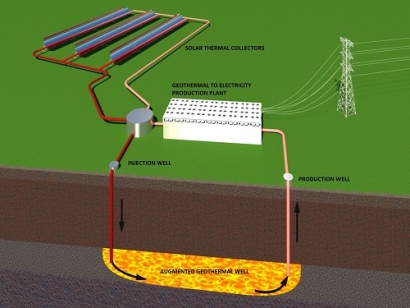
UC Won công bố thử nghiệm công nghệ sản xuất năng lượng địa nhiệt mới 
Phép lịch sự của RenewGeo
Công ty có kế hoạch bắt đầu thử nghiệm để triển khai công nghệ RenewGeo . RenewGeo là thương hiệu cho quy trình độc quyền có tên Năng lượng địa nhiệt tích năng lượng mặt trời nơi năng lượng mặt trời được lưu trữ trong lòng đất để tạo ra năng lượng điện địa nhiệt bền vững 24/7.
Mark Hauenstein, đối tác quản lý tại UC Won, và lãnh đạo dự án tại RenewGeo, cho biết, Hôm nay kết thúc một cuộc tìm kiếm hai năm cho các giếng phù hợp để sử dụng để thử nghiệm. Một trong những lợi thế của công nghệ RenewGeo là tái sử dụng các giếng địa nhiệt hiện tại không có khả năng thương mại hoặc các mỏ dầu / khí bị bỏ hoang để sản xuất năng lượng địa nhiệt tích điện mặt trời. Từ năng lượng trên bầu trời đến dự trữ năng lượng trong lòng đất, công nghệ này mở rộng nơi chúng ta đặt dự án địa nhiệt và là một sự đổi mới trong ngành năng lượng có tính đột phá.
Theo Steve DeOreo, nhà địa chất địa nhiệt làm việc trong dự án, mặc dù địa điểm này ban đầu được phát triển và có tiềm năng cho địa nhiệt thông thường, cấu hình của các giếng hiện tại phù hợp với công nghệ RenewGeo.
Thử nghiệm dự kiến ​​sẽ bắt đầu trong quý II năm 2019 trong khi chờ sắp xếp tài trợ cuối cùng.
UC Won là một Tập đoàn ở Nevada, được thành lập vào năm 2012 để tạo và quản lý một danh mục tài sản trí tuệ tập trung vào các công nghệ liên quan đến năng lượng phù hợp với các mục tiêu môi trường bền vững lâu dài.

Điện được sản xuất theo địa nhiệt là một trong số ít các phương pháp cung cấp nguồn năng lượng sạch, không có carbon liên tục và đáng tin cậy. RenewGeo là công nghệ duy nhất được biết đến có khả năng lấy nhiệt mặt trời để tạo ra năng lượng từ quy mô lớn, lưu trữ nhiệt trên mặt đất.

Theo www.renewableenergymagazine.com

Chủ Nhật, tháng 1 13, 2019

Giao thông tương lai


Thứ Năm, tháng 12 13, 2018

Chế biến nước mắm sử dụng năng lượng mặt trời

Công nghệ chế biến nước mắm sử dụng năng lượng mặt trời

Công nghệ giúp thời gian chế biến mắm từ 13 tháng còn 6 tháng, lượng mắm cốt thu được nhiều hơn 30% so với phương pháp truyền thống.

Trung tâm Ứng dụng tiến bộ khoa học và công nghệ Hà Tĩnh đã nghiên cứu, hoàn thiện công nghệ và thiết bị chế biến nước mắm quy mô công nghiệp sử dụng năng lượng mặt trời. 
Sau gần 2 năm triển khai, nhóm nghiên cứu đã xây dựng quy trình công nghệ sản xuất nước mắm tiên tiến, góp phần tăng năng suất, chất lượng sản phẩm. 
Nhóm nghiên cứu giới thiệu tấm năng lượng mặt trời dùng trong hệ thống chế biến nước mắm.
Công thức tối ưu sau khi khảo nghiệm được nhóm nghiên cứu lựa chọn, với cá cơm tươi từ ngoài biển đánh bắt về đưa vào muối theo tỷ lệ: cá tươi 20% muối.
Cá trộn được cho vào thùng chứa, chượp 4 - 5 ngày, bật máy bơm làm cho nước tại bể muối sau khi thẩm thấu qua lớp lọc (lưới, sỏi) chảy vào ống lọc, từ ống lọc nước mắm được bơm qua bể ổn nhiệt và đẩy trở lại vào bể chượp. 
Nhiệt độ thu được từ các hệ thống thu nhiệt năng lượng mặt trời bằng quá trình bơm tuần hoàn nước từ bể ổn nhiệt sang hệ thống thu nhiệt năng lượng mặt trời.
Quá trình bơm tuần hoàn này làm cho nước từ bể chượp đi qua bể ổn nhiệt và bơm trở lại vào bể chượp, giúp gia tăng nhiệt độ đồng đều trong bể chượp và tăng bề mặt tiếp xúc giữa hệ enzyme và các vi sinh vật với nguyên liệu cá muối trong bể. Cách làm này thay thế được hoàn toàn công đoạn náo đảo và giang phơi theo phương pháp truyền thống.   
Sau 6 tháng chượp chín, mở nút để rút nước mắm cốt và lọc để loại bỏ các cặn bã trong nước mắm.
Tấm năng lượng mặt trời được thiết kế gắn với hệ thống chượp mắm để tạo nhiệt. Ảnh: Đoàn Nguyễn.
Tấm năng lượng mặt trời được thiết kế gắn với hệ thống chượp mắm để tạo nhiệt. Ảnh: Đoàn Nguyễn.
Ths Trần Thị Thúy Anh, Chủ nhiệm Dự án cho biết, lượng nước mắm cốt sử dụng công nghệ mới thu được nhiều hơn 30% so với phương pháp truyền thống nhờ năng lượng mặt trời tạo ra nhiệt độ tối ưu giúp chuyển hóa tối đa nguyên liệu. 
Nhờ bỏ các công đoạn phơi, đảo, lọc đã giúp giảm 2/3 nhân lực lao động so với phương pháp truyền thống. Công nghệ mới này giúp giảm 1/3 thời gian sản xuất nước mắm và góp phần tăng năng suất, chất lượng, giảm giá thành sản phẩm.
Nhóm nghiên cứu cũng tính toán các thông số kỹ thuật để sản xuất tấm thu năng lượng phù hợp với các bể chượp có công suất từ nhỏ đến lớn. 
Để khắc phục hạn chế của công nghệ khi trời mưa, nhiệt độ thấp không thu được năng lượng mặt trời, nhóm nghiên cứu đã thiết kế, chế tạo hệ thống chuyển đổi cấp nhiệt bằng điện cho bể chượp, giúp đảm bảo sản xuất liên tục, giảm thiểu các tác động bất lợi của thời tiết đến quá trình sản xuất.
Ứng dụng công nghệ này các cơ sở sản xuất nước mắm không còn phụ thuộc nhiều vào yếu tố thời tiết. Khi trời không có nắng, có thể dùng điện để đun nóng bể ổn nhiệt.
Áp dụng theo quy trình công nghệ mới đã rút ngắn thời gian chế biến nước mắm xuống còn 6 tháng so với công nghệ truyền thống 13 tháng.
Dự án "Hoàn thiện công nghệ và thiết bị chế biến nước mắm quy mô công nghiệp ứng dụng năng lượng mặt trời", thuộc Chương trình "Hỗ trợ phát triển doanh nghiệp khoa học và công nghệ và tổ chức khoa học công nghệ công lập thực hiện cơ chế tự chủ, tự chịu trách nhiệm" (Chương trình 592).
Để biết thêm thông tin chi tiết về các Chương trình khoa học và công nghệ có thể liên hệ: Văn phòng các Chương trình khoa học và công nghệ quốc gia:
Địa chỉ: Số 113 Trần Duy Hưng, P. Trung Hòa, Q. Cầu Giấy, Hà Nội
Điện thoại: (84.24) 3.5551.726 
Email: vpctqg@most.gov.vn                       
Website: http://www.vpctqg.gov.vn
Đoàn Nguyễn(TheoVnexpress)